Among the important battles fought in Mahadji’s life, the battles of Patan and Merta in Rajputana were crucial. In both these battles, Mahadji's generals prevailed over the Rajput soldiers who were equally matched and ready to sacrifice their lives. In these battles, De Boigne, Scindia's loyal and war-skilled French general, displayed great bravery and played a lion's share in securing victory for the Shindes in both battles. De Boigne was personally present in both these battles, and a military officer under him (most likely Perron) wrote down a description of the Battle of Merta. This description was published in the gazette of the East India Company in Calcutta. It provides detailed and sequential information about these battles. The following account of the Battle of Merta is taken verbatim from a letter written on June 24, 1790. Merta is a village located 76 miles northeast of Ajmer. Diagrams showing the movements of both armies in four stages from the beginning of the Battle of Merta are given at the end of the article.
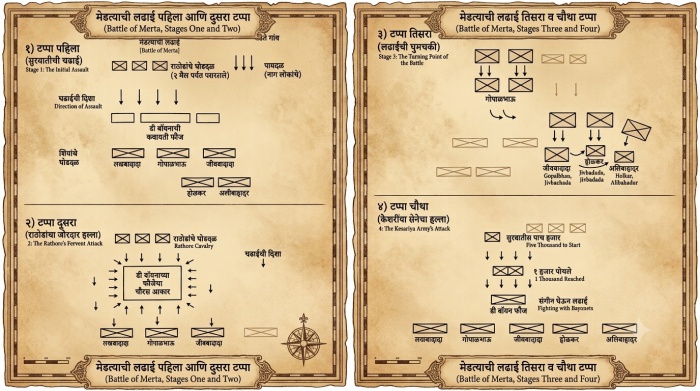
महादजींच्या आयुष्यात ज्या काही महत्त्वाच्या लढाया झाल्या, त्यामध्ये राजपुतानामधील पाटण व मेडता येथील लढाया महत्त्वाच्या होत्या. या दोन्ही लढायांमध्ये महादजींच्या सेनापतींनी तुल्यबळ व जीवावर उदार झालेल्या राजपूत सैनिकांच्यावर मात केली. या लढायांमध्ये शिंद्यांचा एकनिष्ठ युद्धनिपुण फ्रेंच सेनापती डी बॉयन याने चांगलीच मर्दुमकी गाजवली व शिंद्यांना या दोन्ही लढायांमध्ये जय मिळवून देण्यात सिंहाचा वाटा उचलला. डी बॉयन हा स्वतः या दोन्ही लढायांत जातीने हजर होता व त्याच्या हाताखालील एका लष्करी अधिकाऱ्याने (बहुधा पेरॉन) त्याने मेडत्याच्या लढाईचे वर्णन लिहून ठेवले आहे. हे वर्णन ईस्ट इंडिया कंपनीच्या कलकत्ता येथील कंपनीच्या मुखपत्रात (गॅझेतमध्ये) प्रसिद्ध झाले होते. त्यातून या लढायांची तपशीलवार व संगतवार माहिती मिळते. पुढे दिलेला मेडत्याच्या लढाईचा वृत्तांत २४ जून १७९० दिवशी लिहिलेल्या पत्रातून जसाच्या तसा घेतलेला आहे. मेडता हे अजमेरच्या ईशान्येस ७६ मैलावरील एक गाव आहे. मेडत्याच्या लढाईचे सुरुवातीपासूनच्या चार टप्प्यांतील लढाईच्या दोन्ही सैन्यांच्या हालचाली दर्शवणाऱ्या आकृत्या लेखाच्या शेवटी दिलेल्या आहेत.
Battle of Merta (Calcutta Gazette Account)
मेडत्याची लढाई (कलकत्ता गॅझेटमधील वर्णन)
A detailed description of the Battle of Merta is found in the Calcutta Gazette of the East India Company dated July 10, 1790. “In this battle, it is very difficult to divide the credit of bravery among the people who displayed valour and snatched victory. The three military groups of the Marathas involved in this battle were De Boigne and his trained army, Mahadji Shinde's Maratha army, and Tukoji Holkar and his army. In the report of this battle, it is initially stated that when we had laid siege around Ajmer for seventeen days, the enemy planned to attack us with great passion by coming to nearby Merta; then General De Boigne kept around two thousand soldiers for a blockade for the siege of Ajmer and sent the remaining army to Merta to fight.
Due to the severe drought in Rajputana around that time and the extreme scarcity of water caused by the very dry season, we (the Maratha army) had to take a circular route marching after sunset to reach Merta. Therefore, by midnight, we somehow managed to reach the halfway village of Riola along the way. After a short rest, around midnight, we continued our march as before, and upon getting very close to the enemy, around nine in the morning, we suddenly launched a heavy artillery bombardment on the enemy. At the beginning of the battle, the Maratha commanders were eager to charge at the enemy with their cavalry; but at that time, De Boigne forbade their assault, thinking that the Maratha cavalry was exhausted after galloping nearly ten kos throughout the night. Not only that, but since it was around 9–10 in the morning, the atmosphere in that sandy region had become extremely hot. In this battle, the enemy had about thirty thousand cavalry, ten thousand infantry, and twenty-five cannons. On our side, there was nearly equal cavalry, six to seven thousand trained troops, and eighty cannons.
१० जुलै १७९० च्या ईस्ट इंडिया कंपनीच्या कलकत्ता गॅझेटमध्ये मेडत्याच्या लढाईचे सविस्तर वर्णन आढळते. “या लढाईमध्ये ज्या लोकांनी पराक्रम गाजविला व विजयश्री खेचून आणली, त्यांच्यामध्ये पराक्रमाच्या श्रेयाचे विभाजन करणे अतिशय कठीण आहे. या लढाईत सामील झालेले मराठ्यांचे तीन लष्करी गट म्हणजे डी बॉयन व त्याची कवायती फौज, महादजी शिंदे यांचे मराठे सैन्य आणि तुकोजी होळकर व त्याचे सैन्य. या लढाईच्या अहवालामध्ये (Report) सुरुवातीला म्हटले आहे की, “आम्ही अजमेरच्या भोवताली सतरा दिवस वेढा घातला होता, तेव्हा शत्रुपक्षाने अत्यंत जोशामध्ये जवळच्या मेडत्यापर्यंत येऊन आमच्यावर हल्ला करायचा बेत केला, तेव्हा जनरल डी बॉयन याने अजमेरच्या वेढ्यासाठी दोनएक हजार सैनिक नाकाबंदी करण्यास ठेवून बाकीचे सैन्य मेडता येथे लढाई करण्यास पाठवले.
त्या सुमारास राजपुतांनामध्ये पडलेला दुष्काळ व तेथील अतिशय कोरड्या हंगामामुळे पाण्याची अति दुर्भिक्षता झाली होती, त्यामुळे आम्हाला (मराठ्यांच्या फौजेला) मेडत्यापर्यंत पोचायला सूर्यास्तानंतर कूच करीत वर्तुळाकार मार्ग घ्यावा लागला. त्यामुळे मध्यरात्रीपर्यंत आम्हाला कसेबसे वाटेतील निम्म्या अंतरावरील रिओला गावापर्यंत पोचता आले. थोड्याशा विश्रांतीनंतर मध्यरात्रीच्या सुमारास आम्ही आमची चाल तशीच पुढे चालू केली आणि शत्रूच्या अगदी जवळ पोचल्यावर सकाळी नऊच्या सुमारास शत्रूवर अचानक तोफांचा जोरदार भडीमार सुरू केला. लढाईच्या सुरुवातीलाच मराठ्यांचे सेनापती आपले घोडदळ घेऊन शत्रूवर चालून जाण्यास उत्सुक होते; परंतु त्यावेळेस डी बॉयन याने त्यांच्या चढाईस मनाई केली, मराठ्यांच्याकडील घोडदळ रात्रभर जवळपास दहा कोस घोडदौड करून थकले असल्याने त्याने असा विचार केला होता. एवढेच नव्हे, तर तो सकाळचा ९-१०चा सुमार असल्याने तेथील वालुकामय परिसरातील वातावरण अतिशय तापून निघालेले होते. या लढाईत शत्रूकडे सुमारे तीस हजार घोडदळ आणि दहा हजार पायदळ होते, तसेच पंचवीस तोफादेखील होत्या. आमच्या बाजूला जवळपास तेवढेच घोडदळ, सहा ते सात हजार कवायती फौज आणि ऐंशी तोफा होत्या.
Description of the Battle
लढाईचे वर्णन
On the morning of July 10, 1790, at early dawn, we received the order to attack the enemy. Our general must have chosen such an early morning time for the assault to avoid the trouble of the afternoon desert sun. Just like the memorable Battle of Patan, our army was arranged in the same formation this time as well. At the beginning of the battle, cannon fire started from our side, and a counterattack of equal intensity was launched from the opposite side. After that, our front line of fifty cannons began firing grape shots of musket balls. At such a time, due to the intense fire and dominance of our shooting, many enemy soldiers broke their battlefield formation and were scattered. At this time, an officer of Scindia, elated by the temporary success in battle, stood in front of our three battalions with his cavalry unit to attack. Due to this, the impact of our musket volleys was blunted. The enemy immediately took advantage of this opportunity and launched such a fierce counterattack on the forward cavalry that the troopers barely escaped with their lives and retreated.
Then, excited by this success, the enemy soldiers launched a heavy counterattack on our main force from all four sides, from the front, both flanks, and the rear; but at this moment, due to the prior experience and presence of mind of General De Boigne, we were saved alive. Realizing the above major blunder by the Marathas, De Boigne formed a hollow square so that even if the enemy surrounded us from all four sides, we could counterattack them. In this way, against the attack coming from all four sides of the enemy, our soldiers began striking the enemy in all four directions. Due to this type of military formation, the enemy could not achieve much, and around eleven in the morning, the enemy began to retreat.
Around midday, we took possession of their camp, and at three o'clock, we captured their fortified town of Merta. As the enemy soldiers retreated from this battle, we looted the enemy side continuously for three days, and if detailed information about what and how much equipment of the enemy was looted is given, it would make the reader's mouth water. The women of that town were initially a bit bewildered by our sudden arrival; but after some time passed, they began to interact with us properly, and at that time we experienced the truth that victory and the maiden of valour crown only the brave.
दिनांक १० जुलै १७९० या दिवशी पहाटे पहाटे आम्हाला शत्रूवर हल्ला चढवण्याचा हुकूम मिळाला. दुपारी झाल्यावर वाळवंटातील उन्हाचा त्रास चुकविण्यासाठी चढाई करण्यासाठी अशी पहाटेची वेळ आमच्या सेनापतीने निवडली असावी. पाटणच्या संस्मरणीय लढाईप्रमाणेच यावेळी पण आमच्या सैन्याची रचना केलेली होती. लढाईच्या आरंभासच आमच्या बाजूने तोफांचा मारा सुरू झाला व उलट बाजूने त्याच प्रखरतेने प्रतिहल्ला चढवला गेला. त्यानंतर आमची पन्नास तोफांची जी पुढची फळी होती, त्यांनी आता बंदुकीच्या गोळ्यांच्या गुच्छफैरी (Grape shots) झाडायला सुरुवात केली. अशावेळी आमच्या गोळीबाराच्या प्रखर माऱ्यामुळे व तिच्या प्राबल्यामुळे शत्रूचे अनेक सैनिक त्यांची लढाईतील केलेली व्यूहरचना सोडून सैरभैर झाले. यावेळी शिंद्यांचा एक अधिकारी लढाईतील तत्कालीन यशामुळे हुरळून जाऊन त्याची घोडदळ फौज घेऊन आमच्या तीन बटालियनच्या समोर येऊन हल्ला करायला उभा राहिला. त्यामुळे आमच्या बंदुकीच्या फैऱ्यांचा मार बोथट झाला. शत्रूने लगेचच या संधीचा फायदा घेतला आणि पुढे आलेल्या आपल्या घोडदळावर एवढा जोराचा प्रतिहल्ला चढविला की, घोडदळातील स्वार कसाबसा जीव वाचवून मागे फिरू शकले.
नंतर या यशाने उत्साहित झालेल्या शत्रुसैनिकांनी आमच्या मुख्य फौजेवर समोरून आणि दोन्ही बाजूंनी व पाठीमागून असा चारीबाजूंनी जोरदार प्रतिहल्ला चढविला; परंतु यासमयी जनरल डी बॉयन याचा पूर्वानुभव आणि प्रसंगावधान यामुळे आम्ही जीवानिशी वाचलो. मराठ्यांच्याकडील वरील घोडचूक लक्षात आल्यावर डी बॉयन याने आमचा एक रिकामा चौकोन तयार केला, ज्यायोगे आम्हाला चारी बाजूंनी शत्रूने घेरले तरी आम्ही त्यांच्यावर प्रतिहल्ला करू शकू. अशा रीतीने शत्रूच्या चारी बाजूंनी आलेल्या हल्ल्याला आमचे सैनिक चारी दिशांनी शत्रूवर प्रहार करू लागले. या प्रकारच्या आमच्या सैन्यरचनेमुळे शत्रूपक्षाचे फारसे चालेले नाही व सकाळी साधारण अकरानंतरच्या सुमारास शत्रूने माघार घेण्यास सुरुवात केली.
साधारण माध्यान्हीच्या सुमारास आम्ही त्यांच्या छावणीचा ताबा घेतला आणि तीन वाजता आम्ही तटबंदीने सुरक्षित असलेले त्यांच्या मेडता गावावर कब्जा मिळवला. या लढाईतून शत्रू सैनिकांनी माघार घेतल्याने आम्ही शत्रुपक्षाची सतत तीन दिवस लुटालूट केली आणि त्यावेळी शत्रूचे कोणते व किती सामान लुटले, त्याची तपशीलवार माहिती दिली तर वाचणाऱ्याच्या तोंडाला पाणी सुटेल. त्या गावातील महिला आमच्या अचानकपणे येण्यामुळे सुरुवातीला थोड्याशा बावचळल्या होत्या; पण काही वेळ गेल्यावर आमच्याशी व्यवस्थितपणे वागू लागल्या व शूरालाच विजयश्री व वीरांगना माळ घालते, याची प्रचिती आम्हाला त्यावेळी आली.
Bravery of Rathore Soldiers
राठोड सैनिकांची बहादुरी
The town of Merta captured by us was larger in area than Benares, surrounded by strong earthen fortifications, and the surrounding defensive wall was found to be thirty feet high. There were two tall minarets in the town, and the houses in the town were permanent structures. In this battle, six to seven thousand soldiers of the enemy army were wounded or killed. When the commander of the enemy army, Gangaram Bhandari, was trying to flee the battlefield disguised as a servant, our people captured him on the eleventh day.
The bravery displayed in this battle by the soldiers in saffron clothes (Kesariya) of the Rajputs was truly indescribable! A Kesariya soldier is one who appears on the battlefield with a firm resolve to sacrifice his life. I saw with my own eyes that when chaos began in the enemy's formation, fifteen to twenty of the enemy came and engaged with our infantry of one hundred men; while our musket firing was continuously going on, they advanced forward with heroism for ten to fifteen paces without wavering, and finally, all of them were killed on the spot by our musket bullets and became martyrs.
European Captain Baou, who was leading on the enemy's right flank, was wounded in the thigh and lost his life on the battlefield itself. Also, their Lieutenant Roberts was fatally wounded because he was hit by bullets from a specific type of firearm. This firearm had thirty-six barrels. Five major chieftains of the Rathores were killed, including the Rana's nephew. When these five chieftains realized that they could no longer escape, they jumped to the ground from their horses, each fought fiercely against fifteen to twenty of our men, and finally gave up their lives after their bodies were hacked to pieces. Our victory over the most valorous Udaipur cavalry in the world was made possible due to the calm-headed planning, presence of mind, and fearlessness of General De Boigne. Two days after the battle, Ismail Beg, who had joined Rajputana, appeared at Nagaur, two kos away from us; but it was too late for him to arrive.
आमच्या ताब्यात आलेले मेडता गाव हे बनारसपेक्षा क्षेत्रफळात मोठे होते व गावाच्या भोवताली मातीची मजबूत तटबंदी होती व संभोतालची बांधलेली संरक्षक भिंत तीस फूट उंच आढळली. गावात दोन उंच मिनार आणि गावातील घरे पक्की होती. या लढाईत शत्रू फौजेचे सहा ते सात हजार सैनिक घायाळ वा मृत झाले. शत्रूसेनेचा सेनापती गंगाराम भंडारी जेव्हा तो एका नोकराच्या वेशात रणभूमीवरून पळून जायचा प्रयत्न करीत होता, तेव्हा त्याला आमच्या लोकांनी अकराव्या दिवशी कैद केले.
या लढाईत राजपुतांच्या केशरी कपड्यातील (केशरिया) सैनिकांनी जे शौर्य दाखवले, ते साक्षात अवर्णनीय असे होते! केशरिया सैनिक म्हणजे हा जो रणांगणावर प्राण अर्पण करण्याच्या दृढ निश्चयाने अवतरलेला असतो. मी स्वतःच्या डोळ्यांनी पाहिले की, शत्रूच्या रचनेत गोंधळ होण्यास सुरुवात झाली, तेव्हा शत्रूचे पंधरा-वीस लोक आमच्या शंभर जणांच्या पायदळाशी येऊन भिडले होते, आमच्या बंदुकीच्या फैरी अखंड चालू असताना न डगमगता दहा-पंधरा पावले ते तसेच वीरश्रीने पुढे आले आणि शेवटी आमच्या बंदुकीच्या गोळ्यांमुळे सारेजण जागेवर मारले गेले व हुतात्मा झाले.
उजव्या बगलेवर नेतृत्व करणारा शत्रू पक्षाकडील युरोपियन कॅप्टन बेहोरे (Baou) याला मांडीत जखम झाली व त्याने युद्धभूमीवरच आपले प्राण सोडले. तसेच, त्यांचा लेफ्टनंट रॉबर्ट्स हा वर्मी घाव लागून घायाळ झाला कारण त्याला एका विशिष्ट प्रकारच्या बंदुकीच्या गोळ्या लागल्या होत्या. या बंदुकीला छत्तीस नळ्या होत्या. राठोडाकडील पाच प्रमुख सरदार ठार झाले, त्यामध्ये राण्याचा पुतण्यापण होता. हे पाच सरदारांना जेव्हा कळून चुकले की, ते आता पळून जाऊ शकत नाहीत, तेव्हा त्यांनी घोड्यावरून जमिनीवर उड्या घेतल्या आणि एकेकजण आमच्यातील पंधरा-वीस जणांशी प्राणपणाने लढला आणि शेवटी त्यांच्या देहाचे तुकडे तुकडे झाल्यावर त्यांनी प्राण सोडला. जगातील सर्वांत शौर्यवान उदयपूरच्या घोडदळावरील आमचा हा विजय जनरल डी बॉयन याच्या शांत डोक्याने केलेल्या व्यूहरचनेमुळे, समयसूचकतेमुळे, बेडरपणामुळे शक्य झाला. लढाईनंतर दोन दिवसांनी राजपुताना सामील असलेला इस्माईल बेग आमच्यापासून दोन कोस अंतरावर नागौर येथे अवतरला; पण त्याला पोचण्यास फार उशीर झाला होता.
Description of the Battle of Merta from Maratha Writings
मराठ्यांच्या लेखणीतून मेडत्याच्या लढाईचे वर्णन
The description of this battle is present in Marathi historical documents. It is equally interesting to look at. According to the information provided by the Marathas, the description of the Battle of Merta is as follows.
Army in Saffron Attire: “After the victory at Patan, Jivbadada turned his march towards Marwar. He issued an order to Bijesingh to pay tribute as before. However, instead of paying tribute, he gave a call to war. Bijesingh held his court and appealed to nearby rulers for help. At this time, all of them were ready to take revenge for the earlier Battle of Patan. 30,000 brave people of Marwar aged between 14 to 60 years became ready for battle. Bijesingh also had his own army of 6,000. They all got ready to fight on the plains of Merta. Merta is located 15 kos east of Ajmer. Among Rajputs and Rathores, saffron attire in battle signifies that the person is ready to sacrifice their life. The entire army of the Rajputs was in saffron attire. Its meaning was their resolve to kill or die in battle. Fleeing from battle does not suit people in this attire. The Rajput army had come to fight in such an attitude. Jagobabapu invaded the invincible Taragarh fort near Ajmer. Jagobabapu could not capture Taragarh by any means! He could not gauge the fortifications of these forts and the force inside. Then, handing over the battle of Taragarh fort to Shivbanana, Jagobabapu departed towards Merta. Lakhbadada, Gopalrao, and De Boigne had already crossed the river and proceeded in the direction of Merta.
Description of the Battle of Merta: Jivbadada crossed the Luni River and reached Merta. On the way during the journey to Merta, De Boigne's cannons got stuck in the sand. The reason for this was that he had not taken sufficient care while transporting the cannons. Because of this, De Boigne had to get stuck there. Had the Rajputs attacked Mahadji's army at this time, the Marathas would have suffered heavy losses. However, they kept waiting for Ismail Beg's army to arrive. The Rajput commander Bhimraj Sanghvi was of the mind to fight the Marathas after Ismail Beg's army arrived. Rana Bijesingh of Jodhpur and Diwan Khubchand had stayed back in Jodhpur. Before the battle broke out, two brave warriors, Thakur Shivsingh of Arwa and Thakur Kahidas of Asop, looted and carried away thousands of heaps of Maratha fodder. The incident of animals' fodder being stolen caused immense trouble to the Marathas later. Later, Ismail Beg joined the Rajputs. By then, De Boigne's cannons had also reached the battlefield.
मराठीतील ऐतिहासिक कागदपत्रांत या लढाईचे वर्णन आलेले आहे. ते पाहणे तितकेच मनोरंजक आहे. मराठ्यांनी दिलेल्या माहितीनुसार, मेडत्याच्या लढाईचे वर्णन असे आहे.
केशरी रंगाच्या पोशाखातील सेना : “पाटणच्या विजयानंतर जीवबादादांनी मारवाडवर मोर्चा वळवला. त्याने बिजेसिंगास पूर्वीप्रमाणे खंडणी देण्याचा हुकूम सोडला. पण, त्याने खंडणी न देता युद्धाची हाक दिली. बिजेसिंगाने आपला दरबार भरवून आसपासच्या संस्थानिकांना मदतीचे आवाहन केले. यावेळी ते सर्व जण या आधीच्या पाटणच्या लढाईचा सूड घेण्यास सज्ज झाले. मारवाडमधील १४ वर्षांपासून ते ६० वर्षे वयापर्यंतचे ३० हजार शूर लोक लढाईला तयार झाले. बिजेसिंगाकडे पण स्वतःचे ६ हजार सैन्य होते. ते सर्व मेडत्याच्या मैदानावर लढाईला सज्ज झाले. मेडता हे स्थान अजमेरच्या पूर्वेस १५ कोस अंतरावर आहे. राजपूत व राठोड यांच्यामध्ये लढाईतील केसरी रंगाचा पोशाख म्हणजे ती व्यक्ती प्राणाच्या आहुतीस तयार आहे, असे दर्शविते. राजपुतांचे सर्व सैन्य केशरी रंगाच्या पोशाखात होते. त्याचा अर्थ म्हणजे लढाईत मारणे किंवा मरणे, असा त्यांचा निर्धार होता. लढाईतून पळून जाणे या पोशाखातील लोकांस शोभा देत नाही. राजपूत सैन्य अशा अविर्भावात लढायला आले होते. अजमेरजवळच्या अजिंक्य, तारागड किल्ल्यांवर जगोबाबापूने स्वारी केली. जगोबाबापूकडून तारागड काही केल्या सर होईना ! त्यांना या किल्ल्यांच्या तटबंदीचा व आतील फौजेचा अंदाज येईना. तेव्हा तारागड किल्ल्याची लढाई शिवबानाना याजकडे सोपवून जगोबाबापू मेडतेकडे रवाना झाले. लखबादादा, गोपाळराव, डी बॉयन हे नदी उतरून मेडत्याच्या दिशेने या आधीच गेले होते.
मेडत्याच्या लढाईचे वर्णन : जीवबादादा लुनी नदी ओलांडून मेडते येथे पोचले. वाटेत मेडत्याच्या प्रवासादरम्यान डी बॉयनच्या तोफा वाळूत रुतून बसल्या. याला कारण म्हणजे त्याने तोफांची वाहतूक करताना पुरेशी काळजी घेतली नव्हती. त्यामुळे डी बॉयनला तेथेच अडकून पडावे लागले. यावेळी राजपुतांनी महादजींच्या सैन्यावर हल्ला केला असता तर मराठ्यांचे खूप नुकसान झाले असते. पण, ते इस्माईल बेगच्या फौजेची वाट पाहत थांबले. राजपूत सेनानी भीमराज संघवी याचा विचार होता की, इस्माईल बेगची फौज आल्यावर मराठ्यांशी लढाई करावी. जोधपूरचा राणा बिजेसिंग व दिवाण खुबचंद जोधपुरास थांबले होते. लढाईला तोंड फुटण्याआधी अर्वा येथील ठाकूर शिवसिंग व असोप येथील ठाकूर काहीदास या दोन शूरवीरांनी मराठ्यांचे वैरणीचे हजारो ढीग लुटून नेले. जनावरांची वैरण पळवून नेण्याच्या गोष्टींचा नंतर मराठ्यांना खूप त्रास झाला. नंतर इस्माईल बेग राजपुतास येऊन मिळाला. तोपर्यंत डी बॉयनच्या तोफासुद्धा युद्धक्षेत्रावर येऊन पोचल्या.
Jivbadada planned an attack on the Rathores on July 10, 1790. The Marathas knew that the Rajputs who came to fight slept after taking opium when sleeping on the battlefield. Therefore, the Marathas launched an attack on the Rajput army early that morning. They slaughtered many Rajputs who were sleeping at that time. By the time the Rajput soldiers woke up from sleep, the Marathas had reached the camps of the Rajput people. Even then, the brave Rajput people launched a counterattack on the Marathas. As soon as they attacked the Maratha artillery, it was shut down. In this way, the enraged Rathores who did not fear death brought the Marathas to their knees. Just then, thousands of Thakurs, Purbhiyas, and Rangdas equipped with weapons came out of the camp. As both armies mixed with each other, the distinction between the soldiers disappeared. On this occasion, brave and experienced chieftains like Generals Jivbadada, Lakhbadada, Jagobabapu, Gopalraobhau, Sadashivmalhar, Appa Khanderao, etc., were in the Maratha army; additionally, the armies of Tukoji Holkar, Bapurao Holkar, and Ali Bahadur were present for assistance.
In this chaos, the Marathas initially gained the upper hand, but later the enemy started gaining the upper hand. The Rajput archers were shooting arrows from a distance. Suddenly, an arrow came and struck a vital spot of Jivbadada's horse. When that horse fell down, a rumour spread here that Jivbadada had fallen. Thus, panic spread among the Marathas at that moment, and some Marathas began to flee. Just then, Jivbadada appeared in the war riding another horse. Then the fleeing soldiers gained courage and returned to fight. Jivbadada immediately corrected this disorder and confusion in his force and reinvigorated heroism back into them. The sword-valiant Rathores, wearing saffron attire, were fighting with the fury to kill or die. Having no choice against them, De Boigne had to fall back. Due to the Rajput attack, the brave Maratha army now began to fight using guerrilla tactics. They opened a path for the Rajput army to come forward. As a result, the Rajputs came close to the Maratha artillery. At such a time, Jivbadada encouraged the chieftains by chanting 'Har Har Mahadev' and launched an attack on the Rajputs. While such mutual slaughter of soldiers was going on, Ismail Beg's army attacked. A fierce battle ensued; not a single Rathore remained alive. The brave vassal Thakurs of Asop, Arwi, Chandod, Govindgarh, and Alniwas were killed, and the remaining army fled to save their lives. An intense battle took place between the Marathas and Rajputs. The Rajput soldiers took blows on their chests and were killed, but they did not flee. Still, nothing worked for them against the Marathas. There is simply no count of how many Rajput soldiers fell on the battlefield in this battle.
Although the Rajputs suffered a major defeat in this Battle of Merta, the Marathas also suffered huge losses. Among the Rajput heroes who created havoc among the Marathas with fierce fury, Thakur Shivsingh of Ahwa suffered 27 wounds. Still, he kept fighting till the end. Finally, he fell to the ground groaning in a wounded state. His people brought him from the battlefield and treated him with medicine. Hearing of his bravery, King Bijesingh set out towards the battlefield to meet him, but Shivsingh passed away before he arrived. After such a fierce battle, Jivbadada captured the city of Merta. In it, he received abundant plunder. The Marwari commander Bhomraj Sanghvi fled and committed suicide by drinking poison. The second-line commander Naik Gangaram Bindhari and Sardar Aliyavar Beg were captured by the Marathas. Due to the failure in the battle, Bijesingh initiated treaty talks with Jivbadada. In those negotiations, a tribute of 20 lakh rupees was fixed. It was decided that out of that, 8 lakh rupees cash, 8 lakh rupees revenue from Sambar, Rupnagar, etc. mahals, and the rest should be paid later. Many people from both Rajputs and Marathas died in this battle. Achieving victory in this manner, the Maratha army turned back at the end of October 1790.
जीवबादादांनी १० जुलै १७९० रोजी राठोडांवर हल्ल्याचा बेत केला. लढाईला आलेले राजपूत रणभूमीवर झोपताना अफू घेऊन झोपतात, हे मराठ्यांना माहिती होते. त्यामुळे मराठ्यांनी त्यादिवशी पहाटेच राजपूत सेनेवर हल्ला चढवला. त्यावेळी झोपेत असणारे बरेच राजपूत त्यांनी कापून काढले. राजपूत सैनिक झोपेतून उठेपर्यंत मराठे राजपूत लोकांच्या गोटापर्यंत पोचले. तरी पण शूर राजपूत लोकांनी मराठ्यांवर प्रतिहल्ला चढविला. मराठ्यांचा तोफखान्यावर त्यांनी हल्ला चढवताच तो बंद पडला. अशा प्रकारे चवताळलेल्या व मरणास न भिणाऱ्या राठोडांनी मराठ्यांस जेरीस आणले. तोच शस्त्रांनी सज्ज असलेले हजारो ठाकूर, पुरभय्ये, रांगडे छावणीतून बाहेर पडले. दोन्ही सैन्य एकमेकांत मिसळल्याने सैनिकांतील भेद दिसेनासा झाला. याप्रसंगी मराठ्यांच्या लष्करात सेनापती जीवबादादा, लखबादादा, जगोबाबापू, गोपाळरावभाऊ, सदाशिवमल्हार, अप्पा खंडेराव वगैरे शूर व अनुभवी सरदार होते; शिवाय तुकोजी होळकर, बापूराव होळकर व अलिबहाद्दर यांचे सैन्य मदतीला होते.
या धुमश्चक्रीत मराठ्यांची आधी सरशी झाली, पण नंतर शत्रूची सरशी होऊ लागली. राजपुतांचे तिरंदाज दुरून शरसंधान करीत होते. त्यांचा अचानक एक बाण येऊन जीवबादादाच्या घोड्याला मर्मस्थानी लागला. तेव्हा तो घोडा खाली पडला, तर इकडे जीवबादादा पडला म्हणून आवई उठली. अशा तऱ्हेने मराठ्यांच्यात त्या क्षणास हाहाःकार माजून काही मराठे पळू लागले. इतक्यात जीवबादादा दुसऱ्या घोड्यावर स्वार होऊन युद्धात दिसू लागले. तेव्हा पळणाऱ्या सैनिकांना धीर येऊन ते लढायला परतले. जीवबादादांनी आपल्या फौजेतील झालेली ही अव्यवस्था व झालेला गोंधळ ताबडतोब सुधारून परत त्यांच्यात वीरश्रीचा संचार केला. तलवार बहाद्दर राठोड त्यातच केशरी वेश घालून मारू वा मरू, या त्वेषाने लढत होते. त्यांच्यापुढे नाईलाज होऊन डी बॉयनला मागे सरकावे लागले. राजपुतांच्या हल्ल्यामुळे मराठ्यांची हिम्मतबहाद्दर फौज आता गनिमीकाव्याने लढू लागली. राजपूत सैन्याला त्यांनी पुढे येण्यास वाट करून दिली. त्यामुळे राजपुतांची मराठ्यांच्या तोफखान्याशी लगट झाली. अशावेळी जीवबादादांनी 'हर हर महादेव'चा घोष करून सरदारांना प्रोत्साहित केले व राजपुतांवर हल्ला चढवला. एकमेकाच्या सैनिकांची अशी कापाकापी चालू असताना इस्माईल बेगच्या सैन्याने हल्ला केला. तुंबळ युद्ध झाले, राठोडांपैकी एकही जिवंत राहिला नाही. असोप, आर्वी, चांदोड, गोविंदगड, अलनिवास येथील मांडलिक शूर ठाकूर मारले गेले व बाकी फौज जीव वाचवून पळून गेली. मराठे व राजपूत यांच्यात जोराची लढाई झाली. राजपूत सैनिक छातीवर वार झेलत ठार झाले; पण त्यांनी पळ काढला नाही. तरी पण मराठयांच्यापुढे त्यांचे काही चालले नाही. या लढाईत राजपुतांचे किती सैनिक धारातीर्थी पडले, याचा हिशेबच नाही.
मेडत्याच्या या लढाईत राजपुतांचा मोठा पराभव झाला तरी मराठ्यांचेही प्रचंड नुकसान झाले. राजपुतांच्या शूरवीरांपैकी ज्या आवेशाने मराठ्यांच्यात प्रलय मांडला होता, त्यांपैकी आहवाचा ठाकूर शिवसिंग यास २७ जखमा झाल्या होत्या. तरी तो शेवटपर्यंत लढत होता. शेवटी तो घायाळ होऊन कण्हत कण्हत भूमीवर पडला. त्यांच्या लोकांनी त्यास रणातून आणून त्याच्यावर औषधोपचार केले. त्याचे शौर्य ऐकून राजा बिजेसिंग युद्धभूमीकडे त्याला भेटायला निघाला, परंतु तो पोचेपर्यंत शिवसिंग याचे निधन झाले. याप्रमाणे भीषण लढाई होऊन जीवबादादांनी मेडते शहर काबीज केले. त्यात त्याला मुबलक लूट मिळाली. मारवाड्यांचा सरदार भोमराज संघवी पळून गेला व त्याने विष पिऊन आत्महत्या केली. दुय्यम फळीतील सरदार नायक गंगाराम बिनधारी व सरदार आलियावर बेग यांना मराठ्यांनी कैद केले. बिजेसिंगने लढाईतील अपयशाने जीवबादादाशी तहाची बोलणी लावली. त्या वाटाघाटीत २० लक्ष रुपये खंडणी ठरली. त्यांपैकी ८ लक्ष रुपये रोख, ८ लक्ष रुपये उत्पन्नाचा सांबर, रूपनगर वगैरे महाल व बाकी पुढे द्यावेत, असे ठरले. या लढ्यात राजपूत व मराठे यांचे बरेच लोक मेले. अशा प्रकारे विजय मिळवून १७९० ऑक्टोबरच्या अखेरीस मराठ्यांची फौज मागे फिरली.
Outcome of the Battle & Control of Ajmer
मेडत्याच्या लढाईची परिणती व अजमेरचा ताबा
Outcome of the Battle of Merta: Due to the decisive victories at Patan and Merta, Mahadji Shinde's power was understood by everyone in Rajputana, and until the end of his life, he was never troubled by the Rajputs. It must be noted here that after these two battles, the Rajputs never meddled with Mahadji Shinde. After these two victories, Mahadji's morale was boosted and gave him encouragement to carry out even larger military operations. His military ambitions expanded, and he asked General De Boigne to raise two more brigades. These brigades made Mahadji Shinde the most powerful centre of power in Hindustan, defying the British. Mahadji Shinde's military movements began to be tracked not only within Hindustan but also outside of Hindustan. Even after the victory in the Battle of Merta, the fort of Ajmer had not come under the control of the Marathas; then, after consulting Jagobabapu, Jivbadada invaded this fort. At that time, Fort Commander Dumraj was holding out. Still, taking the help of Mohammad Jamadar and Mansingh Jamadar, Jagobabapu found precise elevated spots nearby and started cannon fire on the fort from there. Since these two were skilled in battles inside forts, everyone called them 'Raje'. Due to the shower of Maratha cannonballs and artillery, the bastions of the fort began to crumble. Then Fort Commander Dumraj committed suicide by consuming a diamond. Because of this, the people inside the fort lost heart. Soon within a few days, the Ajmer fort, Ajimtara, came under Maratha control. Finally, in February 1791, after two months of battle, the fort was captured. Jagobabapu hoisted the Maratha flag on the fort.
Control of Ajmer: After the victory at Ajmer, the holy place of Pushkarraj also came under Maratha control. Due to this treaty, Bijaysingh gave eight lakh rupees to the Marathas. The Marathas built a sightly and beautiful temple at Pushkarraj. Patilbawa gave the governorship (subhedari) of Ajmer to Jagobabapu's brother, Shivbanana. At that time, a drought had struck the Marwar province. People could not get food to eat! Then Jivbadada spent two lakhs at the Pushkar pilgrimage site for food distribution and charitable work. Lakhbadada was given the governorship of the conquered territory of Rajputana. In this manner, after concluding these important and equally difficult battles victoriously, Mahadji Shinde returned to his favorite place, Mathura, for his encampment.
मेडत्याच्या लढाईची परिणती : पाटण व मेडता येथील खात्रीशीर विजयामुळे महादजी शिंदे यांची ताकद राजपुतानामध्ये सर्वांना समजली आणि त्यांच्या आयुष्याच्या अंतापर्यंत त्यांना राजपुतांकडून कधीही त्रास झाला नाही. ही गोष्ट येथे नमूद केली पाहिजे की, या दोन लढायांनंतर राजपुतांनी महादजी शिंदे याजबरोबर कधीही छेडछाड केली नाही. या दोन विजयांनंतर महादजी यांचे मनोबल उंचावले आणि याहून मोठ्या सैनिकी कारवाया करण्यासाठी त्यांना हुरूप दिला. त्यांनी लष्करी महत्त्वकांक्षा विस्तारित होऊन जनरल डी बॉयन यांस अजून दोन ब्रिगेडची उभारणी करायला सांगितले. या ब्रिगेडने महादजी शिंदे यांना इंग्रजांना न जुमानता हिंदुस्थानातील सर्वशक्तिशाली सत्ताकेंद्र बनवले. केवळ हिंदुस्थानातच नव्हे, तर हिंदुस्थानच्याबाहेरसुद्धा महादजी शिंदे यांच्या लष्करी हालचालींचा मागोवा घेतला जाऊ लागला. मेडत्याच्या लढाईतील विजयानंतरदेखील अजमेरचा किल्ला मराठ्यांच्या ताब्यात आला नव्हता, तेव्हा जगोबाबापूशी सल्लामसलत करून जीवबादादांनी या किल्ल्यावर स्वारी केली. त्यावेळेस किल्लेदार डुमराज दम धरून होता. तरी जगोबाबापूंनी महंमद जमादार व मानसिंग जमादार यांची मदत घेऊन जवळच्या नेमक्या उंच अशा जागा शोधून तेथून किल्ल्यावर तोफांचा मारा सुरू केला. हे दोघे किल्ल्यातील लढायांत वाकबगार असल्याने त्यांना सर्व लोक 'राजे' म्हणत. मराठ्यांच्या गोळ्या व तोफांच्या वर्षावाने किल्ल्याचे बुरूज ढासळू लागले. तेव्हा किल्लेदार डुमराज याने हिरकणी खाऊन आत्महत्या केली. त्यामुळे किल्ल्यातील लोकांचा धीर सुटला. लगेच थोड्या दिवसांत अजमेरचा किल्ला अजिमतारा मराठ्यांच्या ताब्यात आला. दोन महिन्यांच्या लढाईनंतर शेवटी फेब्रुवारी १७९१ मध्ये किल्ला सर झाला. जगोबाबापूने किल्ल्यावर मराठ्यांचे निशाण लावले.
अजमेरचा ताबा : अजमेरच्या जयानंतर पुष्कराज हे पवित्र ठिकाण पण मराठ्यांच्या ताब्यात आले. बिजयसिंगाने या तहामुळे मराठ्यांना आठ लाख रुपये दिले. पुष्कराजला मराठ्यांनी एक प्रेक्षणीय असे सुंदर देवालय बांधले. अजमेरची सुभेदारी पाटीलबावांनी जगोबाबापूंचे बंधू शिवबानाना यास दिली. तेव्हा मारवाड प्रांतात दुष्काळ पडला होता. लोकांना खोयला अन्न मिळेना! तेव्हा जीवबादादांनी पुष्कर तीर्थावर दोन लक्ष खर्च करून अन्नदान व धर्मादाय कामे केली. लखबादादा यांस राजपुतानाच्या जिंकलेल्या प्रदेशाची सुभेदारी देण्यात आली. अशाप्रकारे या महत्त्वाच्या व तितक्याच अवघड लढाया आटोपून विजयी होऊन महादजी शिंदे आपल्या आवडत्या ठिकाणी मथुरेला मुक्कामास परतले.
Tracing the Battle from Rajasthan's History
राजस्थानच्या इतिहासातून मेडत्याच्या लढाईचा मागोवा
Rana Vijay Singh of Jodhpur had been against the Marathas from the beginning and was constantly trying to shake off Maratha dominance. He sent a letter to the British Governor-General Cornwallis requesting help so that he could oust the Marathas; but Cornwallis refused. In the year 1790, Ismail Beg reached Ajmer to aid the Ranas of Jaipur and Jodhpur. Rana Bijaysingh of Jodhpur offered Ajmer and its surrounding region to De Boigne to detach him from Scindia; however, this attempt failed. Tod wrote in 'History of Rajasthan' that when De Boigne's cannons got stuck in the sand on the banks of the Luni River, Rathore commander Shivsingh suggested attacking the Marathas; but Khubchand, the chief commander of the Rathores, made the wrong decision to wait for Ismail Beg. Thus, the opportunity to subdue the Marathas was wasted.
According to British historian James Tod, the Bikaner army had gone to assist Bijaysingh; but as soon as the battle started, they took flight. In the battle that started in the morning, the Rathore army was completely defeated by three o'clock, and the Marathas captured Merta. In this battle, six hundred to seven hundred people of the Rathores were killed. As recorded in the history of Jodhpur, major chieftains from the Rathore side like Thakur Visansingh (Chanod), Thakur Shivsingh (Devli), Shekhawat Jalimsingh (Balda), Thakur Bharatsingh Arjunsingh (Sudani), etc., were martyred. According to the history of Jodhpur, a treaty was signed to pay 60 lakh rupees to the Marathas. Tod has also confirmed this amount. After the battle, on January 1, 1791, when De Boigne went with his army to Mathura to meet Mahadji, Mahadji honored him greatly.
End of Battle and Subsequent Developments: After establishing peace with the Rajputs in this manner, Mahadji Shinde turned his attention toward his administration. Making Gopalrao Bhau Chitnis the governor-general (Sarsubhedar), he appointed Subhedars De Boigne, Lakhbadada, Jivbadada, and Ambuji Ingle under him. After setting his house in order, thoughts of going to Pune began hovering in Mahadji's mind. He had now received a little rest from the countless worries and anxieties so far. His entire life up to this point had been spent merely in the hustle and bustle of war and politics. His mind was under constant pressure. Whether one admits it or not, it must have been affecting his health. Although the wars with the Rajput kings and Ismail Beg had stopped, Ismail Beg was still alive. He was bound to restart his activities as per his habit, there was no doubt. Even so, the Marathas had beaten him several times. Therefore, the apprehension that he would raise his head so soon was low. Under these circumstances, Ismail Beg fled to the Kanod and Rewari provinces and raised a rebellion from there. Then Mahadji Shinde dealt with him appropriately.
"It is difficult to make an equitable distribution of the amount of credit amongst the three claimants viz. De Boigne & his brigades, Sindhia's Maratha army and Holkar's troops. It is however a sad spectacle to see the Marathas and Rajputs engaged in this work of mutual destruction. Bajirao the First brought friendly relations between Marathas and Rajputs, but later days fight between the two weakened both the sides."
जोधपूरचा राणा विजयसिंह हा पूर्वीपासूनच मराठ्यांच्या विरुद्ध होता आणि सतत मराठ्यांचे वर्चस्व झुगारून देण्याच्या प्रयत्नात होता. त्याने इंग्रज गव्हर्नर जनरल कॉर्नवॉलिस याला पत्र पाठवून आपल्याला मदत करायची विनंती केली, ज्यायोगे तो मराठ्यांना हुसकावून लावू शकेल; परंतु कॉर्नवालिसने नकार दिला. सन १७९० मध्ये इस्माईल बेग जयपूर व जोधपूरच्या राण्यांच्या साहाय्यार्थ अजमेरला पोचला. जोधपूरचा राणा बिजयसिंह याने डी बॉयन शिंद्यांपासून फोडण्यासाठी म्हणून अजमेर व त्याचा आसपासचा इलाका देऊ केला; परंतु हा प्रयत्न असफल राहिला. टॉड ख 'राजस्थानचा इतिहास'मध्ये लिहिले आहे की, लुनी नदीच्या काठी डी बॉयनच्या तोफा वाळूत रुतल्यावर राठोड सेनापती शिवसिंह याने मराठ्यांवर आक्रमण करण्याची सूचना केली; परंतु राठोडांचा सेनाप्रमुख खुबचंद याने इस्माईल बेगची वाट पाहण्याचा चुकीचा निर्णय घेतला. अशा प्रकारे मराठ्यांना नामोहरम करण्याची संधी वाया गेली.
इंग्रज इतिहासकार जेम्स टॉडच्या म्हणण्यानुसार, बिकानेरची सेना बिजयसिंहाच्या मदतीस गेली होती; परंतु लढाई सुरू होताच त्यांनी काढता पाय घेतला. सकाळी सुरू झालेल्या लढाईत तीन वाजेपर्यंत राठोड सेनेचा पूर्ण पराभव झाला व मेडत्यावर मराठ्यांनी कब्जा केला. या लढाईत राठोडचे सहाशे ते सातशे लोक कामी आले. जोधपूरच्या इतिहासात नमूद केल्यानुसार राठोडांकडून प्रमुख सरदार ठाकूर विसनसिंह (चणोद), ठाकूर शिवसिंह (देवळी), शेखावत जालीमसिंह (बालदा), ठाकूर भारतसिंह अर्जुनसिंह (सुदानी) इत्यादी शहीद झाले. जोधपूरच्या इतिहासाला धरून मराठ्यांना ६० लाख रुपये देण्याचा तह झाला होता. टॉडनेसुद्धा या रकमेला दुजोरा दिलेला आहे. लढाईनंतर १ जानेवारी १७९१ दिवशी डी बॉयन आपल्या सेनेसह मथुरेस महादजीने भेटायला गेला, तेव्हा महादजींनी त्याचा मोठा सत्कार केला.
लढाईची इतिश्री व पुढील घडामोडी : अशाप्रकारे राजपुतांशी शांतता प्रस्थापित केल्यावर महादजी शिंदे यांनी आपल्या राज्यकारभाराकडे लक्ष पुरविले. गोपाळराव भाऊ चिटणीस यास सरसुभेदार करून त्याच्या हाताखाली डी बॉयन, लखबादादा, जीवबादादा आणि अंबूजी इंगळे या सुभेदारांना नेमले. आपले घर व्यवस्थित केल्यावर महादजी यांच्या मनात पुण्यास जाण्याचे विचार घोळू लागले. आतापर्यंतच्या असंख्य काळज्या व चिंता यातून त्यांना आता थोडासा विश्राम मिळाला होता. आतापर्यंतचा त्यांचा आयुष्यातील काळ नुसता लढाईच्या व राजकारणातील धामधुमीत गेला होता. त्यांच्या मनावर सतत दडपण असे. त्याचा परिणाम नाही म्हटलं तरी त्यांच्या तब्येतीवर होत असेल. राजपूत राजे व इस्माईल बेग यांच्याबरोबर युद्धे थांबली असली तरी इस्माईल बेग अजून जिवंत होता. तो परत त्याच्या सवयीनुसार कारवाया सुरू करणार, यात शंका नव्हती. तरीसुद्धा मराठ्यांनी त्याला बऱ्याच वेळा मार दिला होता. त्यामुळे इतक्या लवकर तो डोके वर काढेल, अशी धास्ती कमी होती. या परिस्थितीत इस्माईल बेग पळून जाऊन कानोड व रेवडी प्रांतात गेला व तेथून त्याने बंड उभारले. तेव्हा महादजी शिंदे यांनी त्याचा यथोचित समाचार घेतला.
"It is difficult to make an equitable distribution of the amount of credit amongst the three claimants viz. De Boigne & his brigades, Sindhia's Maratha army and Holkar's troops. It is however a sad spectacle to see the Marathas and Rajputs engaged in this work of mutual destruction. Bajirav the First brought friendly relations between Marathas and Rajputs,but later days fight between the two weakened both the sides."
The Battle of Merta was not merely a military conflict between the Marathas and the Rajputs; it had far-reaching consequences for the politics of Rajasthan. This proved to be the final major battle between the two sides. Following this conflict, the Rajputs refrained from challenging the Marathas again. Notably, the Marathas did not pursue their victory in a spirit of vindictiveness. Instead of raking up old disputes, feuds, or grievances, they prioritized stability and peace moving forward. This firmly re-established Maratha dominance in Rajasthan. However, the nature of this dominance was not defined solely by military might. By restoring peace after the conflict, refusing to treat the defeated party as permanent enemies, and fostering stability within the state apparatus, the Marathas carved out a distinct identity as a responsible, conciliatory power committed to peace. Winning a war is one thing, but transforming that victory into long-term peace and order is a far greater political test. The Marathas successfully met this challenge to a significant extent following the Battle of Merta. As a remarkable outcome of this broader political process, Ambuji Ingle, a trusted commander of Mahadji, was appointed as the Diwan (chief administrator) of the Kingdom of Udaipur. Ambuji Ingle made the most of this opportunity. He eliminated the instability plaguing the Udaipur kingdom and established peace and order. There is no doubt that he instilled discipline in the administration and strove to restore prosperity and well-being to the lives of the people.
मेडत्याची लढाई ही मराठे आणि राजपूत यांच्यातील केवळ एक लष्करी संघर्ष नव्हता; तिचे परिणाम राजस्थानच्या राजकारणावर दूरगामी झाले. ही लढाई मराठे आणि राजपूत यांच्यातील अखेरची मोठी लढाई ठरली. या संघर्षानंतर राजपूतांनी पुन्हा मराठ्यांच्या विरोधात उभे राहण्याचे टाळले. विशेष म्हणजे, मराठ्यांनीही विजयाचा सूडभावनेने पाठपुरावा केला नाही. जुने वाद, तंटे किंवा हेवेदावे उकरून काढण्याऐवजी त्यांनी पुढे स्थैर्य आणि शांततेला प्राधान्य दिले. यामुळे राजस्थानात मराठी सत्तेचे वर्चस्व पुन्हा एकदा ठामपणे प्रस्थापित झाले. मात्र, या वर्चस्वाचे वैशिष्ट्य केवळ लष्करी सामर्थ्यात नव्हते. संघर्षानंतर शांतता प्रस्थापित करणे, पराभूत पक्षाला कायमचे शत्रू न मानणे आणि राज्यव्यवस्थेत स्थैर्य निर्माण करणे—या माध्यमातून मराठ्यांनी एक जबाबदार आणि शांतता प्रस्थापित करणारी, समन्वयकारी सत्ता म्हणून आपली वेगळी प्रतिमा निर्माण केली. युद्ध जिंकणे ही एक गोष्ट; पण त्या विजयाचे रूपांतर दीर्घकालीन शांतता आणि सुव्यवस्थेत करणे ही त्याहून मोठी राजकीय कसोटी असते. मेडत्याच्या लढाईनंतर मराठ्यांनी ही कसोटी काही प्रमाणात यशस्वीपणे पार पाडली. याच व्यापक राजकीय प्रक्रियेचा एक उल्लेखनीय परिणाम म्हणून की काय म्हणजे महादजींचे विश्वासू सेनापती अंबुजी इंगळे यांना उदयपूरच्या राज्याची दिवाणगिरी प्राप्त झाली. अंबुजी इंगळे यांनी या संधीचे अक्षरशः सोने केले. उदयपूर राज्यातील अस्थिरता दूर करून त्यांनी शांतता आणि सुव्यवस्था प्रस्थापित केली. प्रशासनाला शिस्त लावली आणि प्रजेच्या जीवनात पुन्हा सुबत्ता व समृद्धी आणण्याचा प्रयत्न केला यात शंका नाही.