An important aspect of Shivaji Maharaj’s coronation as Chhatrapati, is the appointment of Gagabhatt as the main officiator of the ceremony, all the way from Kashi, instead of brahmins from Maharashtra. It is from this idea that a conspiracy theory was hatched that the brahmins had opposed the coronation of Shivaji Maharaj. The fact of the matter is that a great event in a great person's life is completed by another person who is equally great in a different field. This meeting of greatness transcends any borders. This transcendence imparts a lofty stature to the ceremony and people's memories forever. Those who wrongly ascribe the idea that local Brahmins oppose coronation are in fact totally ignorant about Gagabhatt's merit and stature amongst the learned pandits and Brahmins at that time.
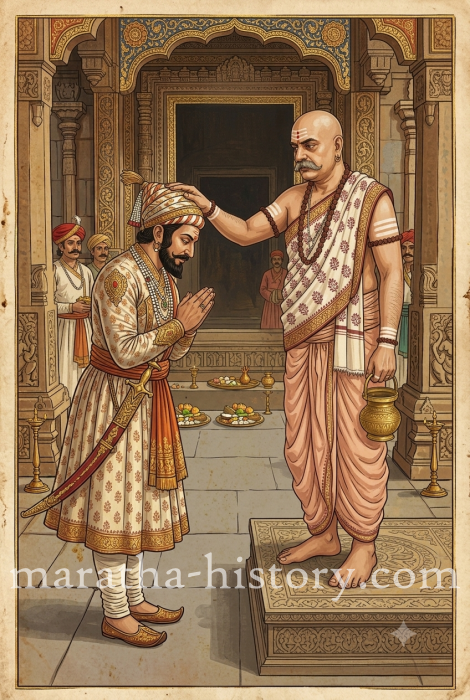
छत्रपती म्हणून शिवाजी महाराजांच्या राज्याभिषेकाचा एक महत्त्वाचा पैलू म्हणजे, महाराष्ट्रातील ब्राह्मणांऐवजी काशीहून आलेल्या गागाभट्टांची या सोहळ्याचे मुख्य पुरोहित म्हणून झालेली नियुक्ती. यातूनच ब्राह्मणांनी शिवाजी महाराजांच्या राज्याभिषेकाला विरोध केला होता, असा एक कट-सिद्धांत (conspiracy theory) रचला गेला. वस्तुस्थिती अशी आहे की, एखाद्या महान व्यक्तीच्या आयुष्यातील महान प्रसंग हा वेगळ्या क्षेत्रातील तितक्याच महान असलेल्या दुसऱ्या व्यक्तीकडून पूर्णत्वास जातो. महानतेचा हा संगम कोणत्याही सीमा ओलांडून जातो. या श्रेष्ठत्वामुळेच या सोहळ्याला आणि लोकांच्या स्मृतींना कायमस्वरूपी एक उदात्त उंची प्राप्त होते. जे लोक स्थानिक ब्राह्मणांनी राज्याभिषेकाला विरोध केल्याचा चुकीचा दावा करतात, ते मुळात तत्कालीन विद्वान पंडित आणि ब्राह्मणांमध्ये गागाभट्टांची असलेली योग्यता आणि प्रतिष्ठा याबद्दल पूर्णपणे अनभिज्ञ आहेत.
On this great auspicious occasion of the coronation in history of Hindustan of an incarnated man who created the world of Swarajya from a great void of despair of Muslim rule, an officiator like Gagabhatt was conspired to be arranged by the universe.
मुस्लिम राजवटीच्या घोर नैराश्यातून स्वराज्याचे विश्व निर्माण करणाऱ्या एका युगपुरुषाच्या हिंदुस्थानच्या इतिहासातील या महान आणि मंगलमय राज्याभिषेकासाठी, निसर्गानेच गागाभट्टांसारख्या विद्वानाची योजना आखली होती.
Who was Gagabhatt?
गागाभट्ट कोण होते?
The clan of Gagabhatt is famous in Kashi as Bhattavansha (Bhatta Clan) and is remembered for their erudition, achievements, and competence. This family has the right of forechair (first chair) amongst the scholars of Kashi and perhaps is the only family who has had this honour for so long. As the gotra of this class was Vishwamitra, it is also referred to as 'Gadhivansh'. A poem named 'Gadhivamshanucharitam' contains information about this clan. Accordingly, the patriarch of the clan was 'Shree Nagpash', who was also a bhatt, which means a very learned scholar. His son and grandson were named 'Changadevbhatta' and 'Govindbhatta' respectively. Since this family was originally from the south (Maharashtra), it is important to note that a descendant of this family, viz. Gagabhatt, still had connections and relationships in Maharashtra. In the astrological treaties by Shree Ramakrushna Bhatta, Bhatta Govind is said to be 'Agasti of the South'.
गागाभट्टांचे घराणे काशींमध्ये 'भट्टवंश' म्हणून प्रसिद्ध आहे आणि ते त्यांच्या विद्वत्ता, कर्तृत्व आणि क्षमतेसाठी ओळखले जाते. या कुटुंबाला काशीतील विद्वानांमध्ये अग्रस्थानाचा अधिकार आहे आणि कदाचित एवढ्या प्रदीर्घ काळासाठी हा सन्मान मिळवणारे ते एकमेव कुटुंब असावे. या वंशाचे गोत्र विश्वामित्र असल्यामुळे त्यांना 'गाधिवंश' असेही म्हटले जाते. 'गाधिवंशानुचरितम्' या काव्यात या घराण्याची माहिती मिळते. त्यानुसार, या घराण्याचे मूळ पुरुष 'श्री नागपाश' हे होते, जे स्वतः एक 'भट्ट' म्हणजे अत्यंत प्रगल्भ विद्वान होते. त्यांच्या मुलाचे आणि नातवाचे नाव अनुक्रमे 'चांगदेवभट्ट' आणि 'गोविंदभट्ट' होते. हे कुटुंब मूळचे दक्षिणेतील (महाराष्ट्रातील) असल्याने, या घराण्याचे वंशज असलेल्या गागाभट्टांचे महाराष्ट्राशी जुने संबंध होते, हे लक्षात घेणे महत्त्वाचे आहे.
His son, Rameshwar Bhatta, was a distinguished scholar and erudite Brahmin. And in the poem 'Gadhivamshanucharitam', Rameshwar Bhatta's achievements are especially highlighted. He lived in 'Paithan' Maharashtra and is eulogised in texts like 'Tristhali Setu' and 'Rasapradipa'. Rameshwar Bhatta was shown as the eternal moon of the ocean of the Vishwamitra clan (Gotra) and was treasurer of all arts, and the land was populated by his disciples. Rameshwar Bhatta was shown like a sun, which bloomed the lotuses of all branches of study. To compete with Harsha's 'Naishadhiy charitra' he wrote a poem titled 'Ramkutuhala'. During his stay in Paithan, students from all over Hindustan used to come to him in droves to study. He then moved from Paithan to Sangamner. Two poems, "Bhattavamsh Kavya" and "Gadhivamshanucharitam," mention that Rameshwar Bhatta healed the leprosy of the son of Jafar Malik, a lord in the court of Ahmednagar. Rameshwar Bhatta had no son, and hence he also travelled to Kolhapur to worship Mahalakshmi, the reigning deity of Kolhapur, who was also the deity of his clan. From Vijaynagara, where he was invited to the court of Samrat Krishnadevaraya, the emperor, he was greatly felicitated in the royal assembly. He then proceeded on a pilgrimage to Dwarka, and in this journey, he was blessed with a son in the month of Chaitra of Saka 1435. The son was named Narayan Bhatta. After this, Rameshwarbhatta had two more sons, viz., Shreedhar and Madhav. Raghunath bhatta, the grandson of Ramshwar bhatta and the son of Madhav bhatta, has mentioned in his treatise 'Kaltatvaviveshan' that Rameshwar bhatta was adorned with three sons resembling Brahma, Vishnu, and Mahesh and resembled supreme Brahman. While staying at Dwaraka for four years, Rameshwar Bhatta taught Mahabhashya and Sureshwaracharya's 'Vartik'. Returning from there to Paithan, he stayed for four years, after which he moved to Kashi and later settled there. Among the many disciples of his in Kashi were some who became particularly famous, viz. Madhusudan Saraswati's Guru, Madhav Saraswati, Mahesh Thakkar, Shankar Mishr, Damodar Saraswati, and Anantbhatta Chitale from Konkan.
श्री रामकृष्ण भट्ट यांच्या ज्योतिषशास्त्रीय ग्रंथात भट्ट गोविंद यांना 'दक्षिणेचे अगस्त्य' म्हटले आहे. त्यांचा मुलगा रामेश्वर भट्ट हे एक प्रख्यात विद्वान आणि पंडित ब्राह्मण होते. 'गाधिवंशानुचरितम्' या काव्यात रामेश्वर भट्टांच्या कर्तृत्वावर विशेष प्रकाश टाकला आहे. ते महाराष्ट्रातील 'पैठण' येथे राहत होते आणि 'त्रिस्थळी सेतू' व 'रसप्रदीप' यांसारख्या ग्रंथांमध्ये त्यांची स्तुती केली आहे. रामेश्वर भट्ट हे विश्वामित्र कुळाच्या महासागराचे शाश्वत चंद्र आणि सर्व कलांचे भांडार होते, तसेच ही भूमी त्यांच्या शिष्यांनी गजबजलेली होती. रामेश्वर भट्ट हे सर्व विद्याशाखांची कमळे उमलवणाऱ्या सूर्यासारखे होते. हर्षाच्या 'नैषधीय चरित'शी स्पर्धा करण्यासाठी त्यांनी 'रामकुतूहल' नावाचे काव्य रचले. त्यांच्या पैठण मुक्कामात संपूर्ण हिंदुस्थानातून विद्यार्थी त्यांच्याकडे शिक्षणासाठी मोठ्या संख्येने येत असत. त्यानंतर ते पैठणहून संगमनेरला गेले.
"भट्टवंश काव्य" आणि "गाधिवंशानुचरितम्" या दोन काव्यांमध्ये उल्लेख आहे की रामेश्वर भट्टांनी अहमदनगरच्या दरबारातील जफर मलिक या सरदाराच्या मुलाचा कुष्ठरोग बरा केला होता. रामेश्वर भट्टांना पुत्रसंतान नसल्याने त्यांनी त्यांच्या कुलदेवतेची, कोल्हापूरच्या महालक्ष्मीची पूजा करण्यासाठी कोल्हापूरचाही प्रवास केला. विजयनगरचे सम्राट कृष्णदेवराय यांच्या दरबारात त्यांना आमंत्रित करण्यात आले होते, तेथे राजसभेत त्यांचा मोठा सन्मान करण्यात आला. त्यानंतर ते द्वारकेच्या यात्रेला गेले आणि या प्रवासात शके १४३५ च्या चैत्र महिन्यात त्यांना पुत्ररत्न प्राप्त झाले. या मुलाचे नाव नारायण भट्ट ठेवण्यात आले. यानंतर रामेश्वरभट्टांना श्रीधर आणि माधव असे आणखी दोन मुलगे झाले. रामेश्वरभट्टांचा नातू आणि माधवभट्टांचा मुलगा रघुनाथ भट्ट याने आपल्या 'कालतत्त्वविवेचन' या ग्रंथात नमूद केले आहे की रामेश्वर भट्ट हे ब्रह्मा, विष्णू आणि महेश यांच्यासारख्या तीन पुत्रांनी सुशोभित होते आणि ते परब्रह्मासमान होते. द्वारकेत चार वर्षे वास्तव्यास असताना रामेश्वर भट्टांनी महाभाष्य आणि सुरेश्वराचार्यांचे 'वार्तिक' शिकवले. तेथून पैठणला परतल्यावर ते चार वर्षे राहिले, त्यानंतर ते काशीला गेले आणि नंतर तिथेच स्थायिक झाले. काशीतील त्यांच्या अनेक शिष्यांपैकी काही विशेष प्रसिद्ध झाले, जसे की मधुसूदन सरस्वतींचे गुरु माधव सरस्वती, महेश ठक्कर, शंकर मिश्र, दामोदर सरस्वती आणि कोकणातील अनंतभट्ट चितळे.
Narayan Bhatta and his scholarly tradition
नारायण भट्ट आणि त्यांची विद्वान परंपरा
Rameshwar Bhatta's eldest son, Narayan Bhatta, did all his studies with his father. After Rameshwar Bhatta's demise his mother went to Sati. Narayan Bhatta was friends with the famous Raja Todarmalla and also won many debates with Gaud and Maithili Pandits. During the reign of Akbar, Narayan Bhatta reconsecrated the Kashi Vishweshwar Linga, which had been destroyed by Muslims earlier. Describing his accomplishments in Dinakarodyot' it says, 'Owing to Narayan Bhatta's deep learning and austerity, he was held in high regard and had been awarded the epithet of Jagadguru'. He had also written a partial commentary on Parthasarathi Mishra's book 'Shastradeepika'. He also authored many books like, Antyeshti paddhati, Ayan Nirnaya, Aatur sanyasa vidhi, Aaramotsargpadhati, Ahnik Vidhi, Kashimaran mukti vichar, Kalmadhavvyakhya, Gotrapravaranirnaya, Teethinirnaya, Tristhali Setu, Tulapurush Mahadan prayog, Divyanushthan padhati, Prayoga ratna, Rudra Padhati, etc.. Many of his books are in circulation today and are regarded as authoritative in the matter of Dharmic decisions. His brothers Shreedhar Bhatta and Madhav Bhatta were also profound scholars and writers.
रामेश्वर भट्टांचा थोरला मुलगा, नारायण भट्ट, यांनी त्यांचे सर्व शिक्षण त्यांच्या वडिलांकडेच पूर्ण केले. रामेश्वर भट्टांच्या निधनानंतर त्यांच्या पत्नी सती गेल्या. नारायण भट्टांची प्रसिद्ध राजा टोडरमल यांच्याशी मैत्री होती आणि त्यांनी गौड व मैथिली पंडितांसोबत अनेक वादविवाद जिंकले होते. अकबराच्या काळात नारायण भट्टांनी पूर्वी मुस्लिमांनी नष्ट केलेल्या काशी विश्वेश्वर लिंगाची पुनर्स्थापना केली. त्यांच्या कर्तृत्वाचे वर्णन 'दिनकरोद्योत'मध्ये करताना म्हटले आहे, 'नारायण भट्टांच्या सखोल विद्वत्तेमुळे आणि तपश्चर्येमुळे त्यांचा खूप आदर केला जात असे आणि त्यांना जगद्गुरू ही पदवी देण्यात आली होती'. त्यांनी पार्थसारथी मिश्रांच्या 'शास्त्रदीपिका' या ग्रंथावर आंशिक भाष्यही लिहिले होते. तसेच अंत्येष्टी पद्धती, अयन निर्णय, आतुर संन्यास विधी, आरामसर्गपद्धती, आह्निक विधी, काशीमरण मुक्ती विचार, कालमाधवव्याख्या, गोत्रप्रवरनिर्णय, तिथीनिर्णय, त्रिस्थळी सेतू, तुलापुरुष महादान प्रयोग, दिव्याअनुष्ठान पद्धती, प्रयोगरत्न, रुद्रपद्धती इत्यादी अनेक ग्रंथ त्यांनी लिहिले. त्यांची अनेक पुस्तके आजही प्रचलित आहेत आणि धार्मिक निर्णयांच्या बाबतीत ती अधिकृत मानली जातात. त्यांचे भाऊ श्रीधर भट्ट आणि माधव भट्ट हेदेखील प्रगाढ अभ्यासक आणि लेखक होते.
He had three sons, namely Ramakrishna Bhatta, Shankar Bhatta, and Govind Bhatta. Ramakrishna Bhatta was also a profound scholar and had written many books like Jeevatpitrukarma Nirnaya, Jyotishtompadhati, Vibhag Tatva, Masik Shraddha Nirnaya, Tantravartik Teeka, etc.. He died at the age of 52, and his wife, Uma, went to Sati with him.
Shankar Bhatta, the second son of Narayan Bhatta, was also a great thinker, and his books like Dwaitnirnaya, Mimansa Balprakash, Dharmaprakash, Nirnayachandrika, Vratamayukha, Vidhirasayanadushan, etc. are famous. His important achievement in the field of Shastras is to unify the two different philosophical views of Bhatta and Prabhakara. Shankar Bhatta himself has authored 'Gadhivanshanucharitam' which gives information about the Bhatta clan. His disciple Bhattoji Dikshit has authored 'Siddhant Kaumudi' which is a universally accepted book amongst grammarians.
Narayan Bhatta's younger brother, Madhav Bhatta, had three sons, Vishwanath, Raghunath, and Prabhakar, all of whom were great thinkers and writers.
Narayan Bhatta's eldest son, Ramakrishana Bhatta, had three sons named Dinkar or Diwakar Bhatta, Kamalakar Bhatta, and Lakshaman Bhatta. Dinkar Bhatta was a mahapandit (profound scholar) and an ascetic. Kamalakar Bhatta, in his famous book 'Nirnayasindhu', has said this about his elder brother: '(sic) I salute (that) elder brother who rested his body at the feet of Bindumadhava.'. Dinkar Bhatta wrote Bhatta Dinakari, Shantisar, and Bhatta Dinakodyot on Shastradeepika. His Kamalakar Bhatta has contributed immensely to theological literature. He was well versed in all Shastras and has written a total of 22 books, of which his major works are Nirnaysindhu, Shudrakamalakara, Vivadatandava, Kavyaprakashavyakhya, Gotrapravardarpana, etc.. It can be rightly said that his book Nirnaysindhu has regulated the general religious life of India. The third brother, Lakshman Bhatta, studied under Kamalakar Bhatta and wrote books such as Aacharratna, Gotrapravararatna, etc..
त्यांना रामकृष्ण भट्ट, शंकर भट्ट आणि गोविंद भट्ट असे तीन मुलगे होते. रामकृष्ण भट्ट हेदेखील प्रगाढ अभ्यासक होते आणि त्यांनी जीवपितृकर्म निर्णय, ज्योतिष्टोमपद्धती, विभाग तत्त्व, मासिक श्राद्ध निर्णय, तंत्रवार्तिक टीका इत्यादी अनेक ग्रंथ लिहिले. वयाच्या ५२ व्या वर्षी त्यांचे निधन झाले आणि त्यांची पत्नी उमा त्यांच्यासोबत सती गेली.
नारायण भट्टांचे दुसरे पुत्र शंकर भट्ट हेदेखील एक महान विचारवंत होते आणि द्वैतनिर्णय, मीमांसा बालप्रकाश, धर्मप्रकाश, निर्णयचंद्रिका, व्रतमयूख, विधिरसायनदूषण इत्यादी त्यांचे ग्रंथ प्रसिद्ध आहेत. भट्ट आणि प्रभाकर या दोन भिन्न तात्विक विचारांचे एकत्रीकरण करणे, ही त्यांची शास्त्र क्षेत्रातील महत्त्वाची कामगिरी आहे. शंकर भट्टांनी स्वतः 'गाधिवंशानुचरितम्' लिहिले आहे ज्यातून भट्ट कुळाची माहिती मिळते. त्यांचे शिष्य भट्टोजी दीक्षित यांनी 'सिद्धान्त कौमुदी' हा ग्रंथ लिहिला आहे, जो व्याकरणकारांमध्ये सर्वमान्य आहे.
नारायण भट्टांचे धाकटे भाऊ माधव भट्ट यांना विश्वनाथ, रघुनाथ आणि प्रभाकर असे तीन मुलगे होते आणि ते सर्व महान विचारवंत व लेखक होते. नारायण भट्टांचा मोठा मुलगा रामकृष्ण भट्ट यांना दिनकर किंवा दिवाकर भट्ट, कमलाकर भट्ट आणि लक्ष्मण भट्ट असे तीन मुलगे होते. दिनकर भट्ट हे महापंडित आणि तपस्वी होते. कमलाकर भट्टांनी आपल्या प्रसिद्ध 'निर्णयसिंधू' या ग्रंथात आपल्या मोठ्या भावाबद्दल म्हटले आहे: 'ज्या मोठ्या भावाने आपला देह बिंदुमाधवाच्या चरणी विसावला, त्याला माझा नमस्कार असो.'. दिनकर भट्टांनी भट्ट दिनकरी, शांतिसार आणि शास्त्रदीपिकेवर भट्ट दिनकरोद्योत लिहिले. कमलाकर भट्टांनी धर्मशास्त्रीय साहित्यात मोलाची भर घातली आहे. ते सर्व शास्त्रांत पारंगत होते आणि त्यांनी एकूण २२ ग्रंथ लिहिले, त्यापैकी निर्णयसिंधू, शूद्रकमलाकर, विवादतांडव, काव्यप्रकाशव्याख्या, गोत्रप्रवरदर्पण इत्यादी प्रमुख आहेत. त्यांच्या 'निर्णयसिंधू' या ग्रंथाने भारतातील सामान्य धार्मिक जीवनाचे नियमन केले असे म्हणणे सार्थ ठरेल. तिसरे भाऊ लक्ष्मण भट्ट यांनी कमलाकर भट्टांच्या हाताखाली शिक्षण घेतले आणि आचाररत्न, गोत्रप्रवररत्न इत्यादी ग्रंथ लिहिले.
Vishweshwar Bhatta alias Gagabhatt
विश्वेश्वर भट्ट ऊर्फ गागाभट्ट
Ramakrishna Bhatta's eldest son, Dinkar or Diwakar Bhatta, was a great ascetic and the father of Gagabhatt. From the above short highlighted information, one can get an overall idea of the authority and power wielded by the Bhatta clan in the context of Dharma and Dharmic life in India. Gagabhatt's given name was Vishweshwar Bhatta. However, his father used to affectionately call him Gaga as a child, and later on, it became popular and proper. Gagabhatt himself gives this information and says in his book Dinakarodyot': 'I was born in the lineage of Narayan Bhatta, the greatest of those famous as captains of the oceans of philosophy. Even though my real name was Vishweshwar, my father, Dinkar Bhatta, fondly named me Gagabhatt, which became the norm. I am completing my father's unfinished work, Dinakarodyot.'.
रामकृष्ण भट्टांचा थोरला मुलगा, दिनकर किंवा दिवाकर भट्ट, हे एक महान तपस्वी आणि गागाभट्टांचे वडील होते. वरील संक्षिप्त माहितीवरून, भारतातील धर्म आणि धार्मिक जीवनाच्या संदर्भात भट्ट घराण्याला असलेल्या अधिकाराची आणि प्रतिष्ठेची सर्वांगीण कल्पना येऊ शकते. गागाभट्टांचे पाळण्यातील नाव विश्वेश्वर भट्ट असे होते. मात्र, त्यांचे वडील बालपणी त्यांना प्रेमाने 'गागा' म्हणत असत आणि पुढे तेच नाव लोकप्रिय आणि रूढ झाले. गागाभट्ट स्वतः ही माहिती देतात आणि त्यांच्या 'दिनकरोद्योत' या ग्रंथात म्हणतात: 'तत्त्वज्ञानाच्या महासागराचे कर्णधार म्हणून प्रसिद्ध असलेल्या नारायण भट्टांच्या वंशात माझा जन्म झाला. माझे खरे नाव विश्वेश्वर असले तरी माझे वडील दिनकर भट्ट यांनी मला प्रेमाने गागाभट्ट हे नाव दिले, जे पुढे रूढ झाले. मी माझ्या वडिलांचे अपूर्ण राहिलेले काम, 'दिनकरोद्योत', पूर्ण करत आहे.'.
Gagabhatt himself was a profound scholar who added fame to his race and family and was influential enough to be considered the Brahma of Kaliyug. His books, Mimamsakusumanjali, Bhattachintamani, Rakagam, Dinakarodyot, Nirudhapushubandh prayog, Pindpitru prayog, Kayasthadharmadeep, Sujnan, Durgodaya, Shivarkodaya, and Shlokavartik demonstrate his great erudition and authority on theology. The real reason he was appointed as the chief to officiate such a meritorious ceremony of coronation was his own and his lineage's unmatched merit and authority.
गागाभट्ट स्वतः एक प्रगाढ विद्वान होते ज्यांनी आपल्या कुळाच्या आणि घराण्याच्या कीर्तीत भर घातली आणि ते कलियुगातील ब्रह्मा मानले जाण्याइतके प्रभावशाली होते. त्यांची मीमांसाकुसुमांजली, भट्टचिंतामणी, राकागम, दिनकरोद्योत, निरुढपशुबंध प्रयोग, पिंडपितृ प्रयोग, कायस्थधर्मदीप, सुज्ञान, दुर्गोदय, शिवार्कोदय आणि श्लोकवार्तिक ही पुस्तके त्यांची धर्मशास्त्रावरील मोठी विद्वत्ता आणि अधिकार सिद्ध करतात. राज्याभिषेकासारख्या अत्यंत पुण्यवान सोहळ्याचे प्रमुख पुरोहित म्हणून त्यांची नियुक्ती होण्याचे खरे कारण त्यांची आणि त्यांच्या घराण्याची अद्वितीय गुणवत्ता आणि अधिकार हेच होते.
Two questions still remain unanswered, viz.,
- Did Gagabhatt come to the south only after hearing the fame of Shivaji Maharaj and urge him for coronation, or did Shivaji Maharaj and Gagabhatt know each other before the coronation?
- Did Gagabhatt have any direct connection with Maharashtra before the coronation?
तरीही दोन प्रश्न अनुत्तरित राहतात:
- शिवाजी महाराजांची कीर्ती ऐकल्यानंतरच गागाभट्ट दक्षिणेत आले आणि त्यांनी त्यांना राज्याभिषेकासाठी गळ घातली, की राज्याभिषेकापूर्वीच शिवाजी महाराज आणि गागाभट्ट एकमेकांना ओळखत होते?
- राज्याभिषेकापूर्वी गागाभट्टांचा महाराष्ट्राशी थेट संबंध होता का?
The initial contact between Shivaji Maharaj and Gagabhatt had been established much earlier and had come to fruition at the time of the coronation. Both of these gentlemen were aware of each other's work and worth. Gagabhatt was always an admirer of Shivaji Maharaj.
According to V. S. Bendrey, "The writers of Bakhars did not understand Gagabhatt and Shivaji Maharaj's relationship prior to the coronation, so they have stated that the pair first met on the occasion of the coronation.". It appears that Gagabhatt, for monetary gains, consented for the coronation, which is factually incorrect. The family of Gagabhatt originated from the South, and Anantdevbhatta of Paithan was his brother disciple (Gurubandhu); hence, he used to visit Paithan from time to time. Gagabhatt was also earlier associated with being an arbitrator for social disputes in the Konkan region of Maharashtra. His first mention is found in the rulings given on Shende-Golak. After that, Gagabhatt travelled to Konkan in 1663, and at the start of 1664, he presided over the establishment of the Shenvi (Saraswat) caste. At Shivaji Maharaj's request, he called a meeting of several Kashi Brahmins, local Maharashtrian pandits, and Upadhyas from the Rajapur area, and he remained there until Anantdeybhatta and the reference books from Indore arrived. After that, during 1669-1672, he passed a few judgements on matters related to Kayastha Prabhus. Later, he wrote a book called Kayastha Dharma Pradeep in which he elaborated on the rights of Kayastha Prabhus, in which he was aided by Anantdevbhatta, and this was mentioned by Raghunath Panditrao.
शिवाजी महाराज आणि गागाभट्ट यांच्यातील प्राथमिक संपर्क खूप आधी प्रस्थापित झाला होता आणि राज्याभिषेकाच्या वेळी त्याचे फळ मिळाले. या दोन्ही महान व्यक्तींना एकमेकांच्या कार्याची आणि मूल्याची जाणीव होती. गागाभट्ट हे कायमच शिवाजी महाराजांचे प्रशंसक होते.
वा. सी. बेंद्रे यांच्या मते, "बखरकारांना राज्याभिषेकापूर्वीच्या गागाभट्ट आणि शिवाजी महाराजांच्या संबंधांची माहिती नव्हती, त्यामुळे त्यांनी असे लिहिले आहे की हे दोघे पहिल्यांदा राज्याभिषेकाच्या निमित्ताने भेटले.". गागाभट्टांनी आर्थिक फायद्यासाठी राज्याभिषेकाला संमती दिली, असा एक चुकीचा समज आहे जो वस्तुस्थितीला धरून नाही. गागाभट्टांचे घराणे मूळचे दक्षिणेकडील होते आणि पैठणचे अनंतदेवभट्ट हे त्यांचे गुरुबंधू होते; त्यामुळे ते वेळोवेळी पैठणला भेट देत असत. गागाभट्ट यापूर्वी महाराष्ट्रातील कोकण प्रदेशातील सामाजिक वादांचे लवाद म्हणूनही जोडले गेले होते. त्यांचा पहिला उल्लेख शेंडे-गोलक प्रकरणातील निवाड्यांमध्ये आढळतो. त्यानंतर गागाभट्टांनी १६६३ मध्ये कोकणात प्रवास केला आणि १६६४ च्या सुरुवातीला त्यांनी शेणवी (सारस्वत) जातीच्या स्थापनेच्या अध्यक्षपदाची धुरा सांभाळली. शिवाजी महाराजांच्या विनंतीवरून त्यांनी राजापूर परिसरातील अनेक काशीतील ब्राह्मण, स्थानिक महाराष्ट्रीयन पंडित आणि उपाध्यायांची एक सभा बोलावली आणि अनंतदेवभट्ट व इंदूरहून संदर्भ ग्रंथ येईपर्यंत ते तिथेच राहिले. त्यानंतर १६६९-१६७२ दरम्यान त्यांनी कायस्थ प्रभूंच्या संदर्भातील काही प्रकरणांवर निवाडे दिले. नंतर त्यांनी 'कायस्थ धर्म प्रदीप' नावाचा ग्रंथ लिहिला ज्यामध्ये त्यांनी कायस्थ प्रभूंच्या अधिकारांचे सविस्तर वर्णन केले. यात त्यांना अनंतदेवभट्टांची मदत झाली आणि याचा उल्लेख रघुनाथराव पंडितांनी केला आहे.