Prelude
Peshwa Bajirao II (1796–1818) signed the Treaty of Vasai in 1802, confirming a Subsidiary Alliance with the East India Company. The Second Anglo-Maratha War soon broke out. Free to deal with the separate constituents of the Maratha Empire, the EIC defeated the Shindes of Gwalior, the Bhonsles of Nagpur, and Holkar in separate battles all across central India. A separate treaty with the Gaekwads of Baroda diminished the Peshwa’s influence in Gujarat and enhanced the EIC’s. The treaty with Bajirao II meant that there was never a threat to them from the Peshwa himself.
पार्श्वभूमी
पेशवे बाजीराव दुसरे (१७९६–१८१८) यांनी १८०२ मध्ये वसईचा तह केला आणि ईस्ट इंडिया कंपनीसोबत 'सहाय्यकारी सैन्याची योजना' (Subsidiary Alliance) स्वीकारली. त्यानंतर लवकरच दुसरे इंग्रज-मराठा युद्ध सुरू झाले. मराठा साम्राज्यातील विविध सत्तांशी स्वतंत्रपणे मुकाबला करण्याची संधी मिळाल्याने, ईस्ट इंडिया कंपनीने मध्य भारतात ठिकठिकाणी झालेल्या स्वतंत्र लढायांमध्ये ग्वाल्हेरचे शिंदे, नागपूरचे भोसले आणि होळकर यांचा पराभव केला. बडोद्याचे गायकवाड यांच्याशी केलेल्या स्वतंत्र तहामुळे गुजरातमध्ये पेशव्यांचा प्रभाव कमी झाला आणि ईस्ट इंडिया कंपनीचे वर्चस्व वाढले. बाजीराव दुसरे यांच्याशी केलेल्या तहाचा अर्थ असा होता की, खुद्द पेशव्यांकडून कंपनीला कोणताही धोका उरला नव्हता.
By 1803, the EIC had become the dominant force in the country, supplanting the Maratha Empire. For Bajirao II, the next ten-odd years went by in relative peace and tranquillity, as he went about his affairs without disturbing his alliance with the English. In 1810, he made Bapu Gokhale the commander of his armies. In 1811, Mountstuart Elphinstone became the Resident at Poona. Both would have a significant role to play in the 3rd Anglo-Maratha War.
१८०३ पर्यंत, मराठा साम्राज्याची जागा घेत ईस्ट इंडिया कंपनी देशातील प्रबळ शक्ती बनली होती. बाजीराव दुसरे यांच्यासाठी पुढील दहा-एक वर्षे तुलनेने शांततेत आणि निवांतपणे गेली; त्यांनी इंग्रजांशी असलेली युती न मोडता आपला कारभार चालवला. १८१० मध्ये त्यांनी बापू गोखले यांची आपल्या सैन्याचे सेनापती म्हणून नियुक्ती केली. १८११ मध्ये माउन्टस्टुअर्ट एल्फिन्स्टन हे पुण्यात 'रेसिडेंट' (कंपनीचा प्रतिनिधी) म्हणून रुजू झाले. तिसऱ्या इंग्रज-मराठा युद्धात या दोघांचीही भूमिका अत्यंत महत्त्वाची ठरणार होती.
While much of the Maratha armies had been defanged by 1805, large bands of irregulars known as Pindaris still roamed many parts of the country, harassing EIC troops. In 1817, the EIC put a large army under the command of Governor-General Lord Hastings and Gen. Thomas Hislop to enter Maratha territories against the Pindaris and finally close the chapter. The Madras Army was to cross the Narmada from the south under Gen. Thomas Hislop, while the Bengal Army was to cross the Yamuna from the north and enter the territories of Scindia and Holkar. The Third Anglo-Maratha War followed. Amongst various other battles, the ones at Mahidpur and Sitabuldi are notable. The former was the final defeat of Holkar against the EIC; the latter, that of the Bhonsles of Nagpur.
१८०५ पर्यंत मराठा सैन्याची बरीचशी ताकद संपुष्टात आली असली, तरी 'पिंडारी' म्हणून ओळखल्या जाणाऱ्या अनियमित सैनिकांचे मोठे गट देशाच्या अनेक भागांत फिरत होते आणि ईस्ट इंडिया कंपनीच्या सैन्याला त्रास देत होते. १८१७ मध्ये, पिंडारींचा बंदोबस्त करण्यासाठी आणि हा अध्याय कायमचा संपवण्यासाठी, ईस्ट इंडिया कंपनीने गव्हर्नर-जनरल लॉर्ड हेस्टिंग्स आणि जनरल थॉमस हिस्लॉप यांच्या नेतृत्वाखाली एक मोठे सैन्य मराठा प्रदेशात पाठवले. जनरल थॉमस हिस्लॉप यांच्या नेतृत्वाखालील मद्रास सैन्याने दक्षिणेकडून नर्मदा नदी ओलांडायची होती, तर बंगाल सैन्याने उत्तरेकडून यमुना नदी ओलांडून शिंदे आणि होळकर यांच्या प्रदेशात प्रवेश करायचा होता. यातूनच तिसरे अँग्लो-मराठा युद्ध सुरू झाले. इतर अनेक लढायांपैकी महिदपूर आणि सीताबर्डी येथील लढाया विशेष उल्लेखनीय आहेत. यातील महिदपूरची लढाई ही ईस्ट इंडिया कंपनीविरुद्ध होळकरांचा झालेला अंतिम पराभव होता; त्यापैकी दुसरे म्हणजे नागपूरचे भोसले.
Peshwa Bajirao II was expected to wholeheartedly help the EIC in this campaign. The forts of Sinhagad, Purandar, and Raigad were returned to him, and he earnestly set about raising troops for the Pindari campaign. Bajirao II raised levies by giving higher pay than usual, but insisted for the moment on keeping these troops in the whereabouts of Pune and not sending them across the Narmada where most of the fighting was expected to happen. Moreover, the number of men he had recruited under liberal payment terms was more than double the number expected by the EIC! Bajirao II, while promising all help to the EIC, also placed a crore of rupees in the hands of Bapu Gokhale for raising armies. He further returned many confiscated lands to various jagirdars. The forts in the Sahyadris were stocked with grain and stores.
या मोहिमेत ईस्ट इंडिया कंपनीला (EIC) पूर्ण सहकार्य करण्याची अपेक्षा पेशवे बाजीराव दुसरे यांच्याकडून होती. त्यांना सिंहगड, पुरंदर आणि रायगड हे किल्ले परत करण्यात आले आणि त्यांनी पिंडारींविरुद्धच्या मोहिमेसाठी सैन्य उभारण्याचे काम उत्साहाने सुरू केले. बाजीराव दुसरे यांनी नेहमीपेक्षा अधिक वेतन देऊन सैन्याची भरती केली; परंतु, जिथे मुख्य लढाई होण्याची शक्यता होती त्या नर्मदा नदीपलीकडे हे सैन्य न पाठवता, त्यांना पुण्याच्या आसपासच ठेवण्यावर त्यांनी सुरुवातीला आग्रह धरला. शिवाय, उदार वेतनावर त्यांनी भरती केलेल्या सैनिकांची संख्या ईस्ट इंडिया कंपनीच्या अपेक्षापेक्षा दुप्पट होती! ईस्ट इंडिया कंपनीला सर्वतोपरी मदत करण्याचे आश्वासन देतानाच, बाजीराव दुसरे यांनी सैन्य उभारणीसाठी बापू गोखले यांच्याकडे एक कोटी रुपये सुपूर्द केले. तसेच, त्यांनी विविध जहागीरदारांच्या जप्त केलेल्या अनेक जमिनी त्यांना परत केल्या. सह्याद्रीतील किल्ल्यांवर धान्य आणि इतर आवश्यक साहित्याचा साठा करण्यात आला.
The Treaty of Bassein was proving an albatross around Bajirao’s neck, with the EIC interfering in his dealings even with the jagirdars around Pune. Informants and spies brought every activity to Elphinstone’s notice. In midst of this, the EIC faced a few reversals in the Gurkha War (1815), Bajirao II immediately saw this as an opportunity and sent letters to numerous kingdoms - Nepal, Burma, Kashmir, Shinde, Maharaja Ranjit Singh, Jodhpur and others to make common cause against the English. Although nothing came of this, since the EIC eventually managed to win the Gurkha War, it marked another point in the swift spiralling relations with the Peshwa.
वसईचा तह बाजीरावासाठी एक मोठे ओझे ठरत होता, कारण ईस्ट इंडिया कंपनी पुण्याच्या आसपासच्या जहागीरदारांशी असलेल्या त्यांच्या व्यवहारांतही हस्तक्षेप करत होती. खबऱ्यांमार्फत आणि हेरांद्वारे प्रत्येक हालचालीची माहिती एल्फिन्स्टनपर्यंत पोहोचवली जात असे. अशा परिस्थितीत, गुरखा युद्धादरम्यान (१८१५) ईस्ट इंडिया कंपनीला काही प्रमाणात अपयश आले. बाजीराव दुसरे यांनी याकडे त्वरित एक संधी म्हणून पाहिले आणि इंग्रजांविरुद्ध संयुक्त आघाडी उभारण्यासाठी नेपाळ, ब्रह्मदेश, काश्मीर, शिंदे, महाराज रणजित सिंग, जोधपूर आणि इतर अनेक राज्यांना पत्रे पाठवली. जरी यातून काहीही निष्पन्न झाले नाही—कारण ईस्ट इंडिया कंपनीने अखेरीस गुरखा युद्ध जिंकले—तरीही पेशव्यांशी असलेल्या संबंधांमध्ये वेगाने निर्माण होत असलेल्या तणावाच्या दृष्टीने ही एक महत्त्वाची घटना ठरली.
Trimbakji Dengale and Gangadhar Shastri
त्र्यंबकजी डेंगळे आणि गंगाधर शास्त्री
In 1814, Bajirao II named Trimbakji Dengle as his Chief Minister. He immediately set about trying to once again united the various Maratha sardars together. Dengle provided the tact and diplomacy that the Peshwa lacked.
१८१४ मध्ये, बाजीराव दुसऱ्याने त्र्यंबकजी डेंगळे यांची मुख्य मंत्री (कारभारी) म्हणून नियुक्ती केली. त्यांनी त्वरित विविध मराठा सरदारांना पुन्हा एकत्र आणण्याचे प्रयत्न सुरू केले. पेशव्यांकडे ज्या मुत्सद्देगिरीचा आणि चातुर्याचा अभाव होता, ती उणीव डेंगळे यांनी भरून काढली.
Gaekwads of Baroda were another constituent of the Maratha Empire, but like the others, following the Treaty of Vasai, they too signed a separate treaty with the EIC. Thus, the Peshwa’s influence in Gujarat came to be severely curtailed. Even so, there several financial and territorial disputes between Bajirao II and the Gaekwad for which the Gaekwad government sent their diplomat - Gangadhar Shastri for negotiations at Pune. While on a pilgrimage to nearby Pandharpur, Gangadhar Shastri was murdered. The British squarely blamed Trimbakji Dengale for this and had him imprisoned in their fort at Thane. But Dengle escaped and soon organised the Bhils and Ramoshis against the EIC. Again, Elphinstone protested to Bajirao II who promised to capture Dengle and made some half-hearted efforts.
बडोद्याचे गायकवाड हे मराठा साम्राज्याचाच एक भाग होते; परंतु वसईच्या तहानंतर इतर सरदारांप्रमाणेच त्यांनीही ईस्ट इंडिया कंपनीशी (EIC) स्वतंत्र तह केला. यामुळे गुजरातमध्ये पेशव्यांचा प्रभाव मोठ्या प्रमाणावर कमी झाला. तरीही, बाजीराव दुसरा आणि गायकवाड यांच्यात अनेक आर्थिक व प्रादेशिक वाद होते; त्यासंदर्भात वाटाघाटी करण्यासाठी गायकवाड यांनी आपला मुत्सद्दी - गंगाधर शास्त्री - याला पुण्याला पाठवले. जवळच असलेल्या पंढरपूरच्या तीर्थयात्रेवर असताना गंगाधर शास्त्री यांची हत्या करण्यात आली. ब्रिटिशांनी या हत्येसाठी थेट त्र्यंबकजी डेंगळे यांना जबाबदार धरले आणि त्यांना ठाण्याच्या किल्ल्यात कैद केले. मात्र, डेंगळे तिथून निसटले आणि त्यांनी लवकरच ईस्ट इंडिया कंपनीविरुद्ध भिल्ल व रामोशी यांना संघटित केले. एल्फिन्स्टन यांनी पुन्हा एकदा बाजीराव दुसऱ्याकडे याबद्दल निषेध नोंदवला; बाजीरावांनी डेंगळे यांना पकडण्याचे आश्वासन दिले आणि तसे काहीसे अर्धवट प्रयत्नही केले.
In June 1817, the EIC forced the Treaty of Poona on the Peshwa. He was to cease all communications with any and every court in India, whether they be Maratha subhedars or Jagirdars. A new regiment called the Poona Horse was raised, funded by Bajirao II of course. All territories north of the Narmada and south of the Tungabhadra were ceded by him, and he also lost all claims on the Gaekwads of Gujarat.
जून १८१७ मध्ये, ईस्ट INDIA कंपनीने पेशव्यांवर 'पुण्याचा तह' लादला. या तहानुसार, त्यांना भारतातील कोणत्याही दरबाराशी - मग ते मराठा सुभेदार असोत किंवा जहागीरदार - कोणताही संपर्क ठेवण्यास मनाई करण्यात आली. 'पुणे हॉर्स' (Poona Horse) नावाची एक नवीन लष्करी तुकडी उभारण्यात आली, ज्याचा खर्च अर्थातच बाजीराव दुसऱ्याला करावा लागला. नर्मदा नदीच्या उत्तरेकडील आणि तुंगभद्रा नदीच्या दक्षिणेकडील सर्व प्रदेश त्यांना कंपनीला सोपवावे लागले, तसेच गुजरातच्या गायकवाडांवरील त्यांचे सर्व हक्कही संपुष्टात आले.
At a conference with Sir John Malcolm, Bajirao II protested against the Treaty of Poona, lamenting that it had finished his power. The Peshwa himself set about trying to wean away native troops under the EIC’s pay.
सर जॉन मॅल्कम यांच्यासोबतच्या एका बैठकीत बाजीराव दुसऱ्यांनी पुण्याच्या तहाचा निषेध केला आणि या तहामुळे आपली सत्ता नष्ट झाल्याची खंत व्यक्त केली. त्यानंतर पेशव्यांनी स्वतःच ईस्ट इंडिया कंपनीच्या सेवेतील (पगारावरील) स्थानिक सैनिकांना कंपनीपासून दूर व आपल्या बाजूने वळवण्याचे प्रयत्न सुरू केले.
By October 1817, it was more than apparent to Elphinstone that something was afoot. By the end of that month, he had received intelligence that the Peshwa intended to start a guerrilla war against the EIC, where his commander Bapu Gokhale would lead the armies. The theatre of war would not be the city, but the surrounding areas still governed by Bajirao II. Although the Treaty of Poona (1817) banned it, the Peshwa was in regular communication with Holkar at Indore and Appa Sahib at Nagpur. The EIC’s spy network was strong, and via ministers of the Peshwa such as Yashwantrao Ghorpade and Balajipant Natu, information trickled in.
ऑक्टोबर १८१७ पर्यंत, काहीतरी हालचाल सुरू असल्याचे एल्फिन्स्टन यांच्या पूर्णपणे लक्षात आले होते. त्या महिन्याच्या अखेरीस त्यांना अशी गुप्त माहिती मिळाली की, पेशवे ईस्ट इंडिया कंपनीविरुद्ध गनिमी काव्याचे युद्ध सुरू करण्याच्या तयारीत आहेत आणि त्यांचे सेनापती बापू गोखले या सैन्याचे नेतृत्व करणार आहेत. युद्धाचे मुख्य क्षेत्र हे शहर नसून, बाजीराव दुसऱ्याच्या अधिपत्याखालील आसपासचा प्रदेश असणार होता. पुणे कराराने (१८१७) तशी मनाई केलेली असूनही, पेशव्यांचा इंदूरचा होळकर आणि नागपूरचा आप्पासाहेब यांच्याशी नियमित संपर्क सुरू होता. ईस्ट इंडिया कंपनीची हेरखाते यंत्रणा अत्यंत सक्षम होती आणि यशवंतराव घोरपडे व बाळाजीपंत नातू यांसारख्या पेशव्यांच्या मंत्र्यांमार्फत त्यांना गुप्त माहिती मिळत असे.
On 14th October, Elphinstone met Peshwa Bajirao for the last time. A promise was made to send the Maratha armies on the Pindari campaign post-Dussehra (19th Oct 1817). The Peshwa and Bapu Gokhale had by now made up their minds to attack the East India Company troops, and now it was only a question of when.
१४ ऑक्टोबर रोजी एल्फिन्स्टनने पेशवे बाजीराव यांची शेवटची भेट घेतली. दसऱ्यानंतर (१९ ऑक्टोबर १८१७) मराठा सैन्य पिंडारी मोहिमेवर पाठवण्याचे आश्वासन देण्यात आले. तोपर्यंत पेशवे आणि बापू गोखले यांनी ईस्ट इंडिया कंपनीच्या सैन्यावर हल्ला करण्याचा निर्णय पक्का केला होता; आता केवळ 'कधी' हाच प्रश्न उरला होता.
Battleground
युद्धभूमी
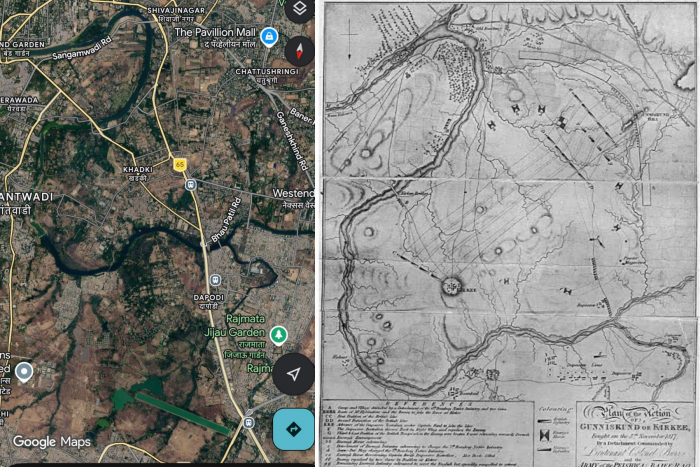
Bhamburda (Shivajinagar) was then a small village that existed outside of Pune’s limits. In fact, it was only about 1886 that it was included in the Pune Municipality. From that village stretched out a vast plain mainly covered by farms, hedges, and barren land with some scrubs and trees here and there. One long road stretched out connecting the villages of Bhamburda and Aundh, from where it continued towards the Bor Ghat. A smaller road, now entirely subsumed by housing colonies in Shivajinagar, connected the village of Bhamburda to the temple of Chatushringi. A series of low-lying hills in a C-shape terminated at the Chatushringi temple. Near the base of the hill was a (still existing) temple of Ganpati (Parvatinandan temple)—hence the name Ganesh Khind. Khadki was directly approachable from Ganeshkhind road, there being no University in between.
भांबुर्डा (शिवाजीनगर) हे तेव्हा पुण्याच्या हद्दीबाहेर वसलेले एक छोटेसे गाव होते. खरे तर, १८८६ च्या सुमारास ते पुणे नगरपालिकेत समाविष्ट करण्यात आले. त्या गावापासून पुढे शेते, कुंपणे आणि काही ठिकाणी झुडपे व झाडे असलेली ओसाड जमीन असलेला एक विस्तीर्ण मैदानी प्रदेश पसरलेला था. भांबुर्डा आणि औंध या गावांना जोडणारा एक लांब रस्ता तेथून जात असे आणि पुढे तो बोरघाटाकडे जात असे. एक लहान रस्ता—जो आता शिवाजीनगरमधील निवासी वस्त्यांच्या गर्दीत पूर्णपणे लुप्त झाला आहे—भांबुर्डा गावाला चतुःशृंगी मंदिराशी जोडत असे. 'C' (सी) आकारात पसरलेल्या टेकड्यांची एक मालिका चतुःशृंगी मंदिरापाशी संपत असे. टेकडीच्या पायथ्याशी गणपतीचे (पार्वतीनंदन) एक मंदिर होते (जे आजही अस्तित्वात आहे); म्हणूनच या भागाला 'गणेशखिंड' हे नाव पडले. गणेशखिंड रस्त्यावरून खडकीला थेट जाता येत असे, कारण तेव्हा मध्ये विद्यापीठ अस्तित्वात नव्हते.
In fact, the verdant greenery of the University is the direct result of a concentrated afforestation effort by the British Govt. In 1860, the "Governor's House" was established as the summer residence of the British Governor of the Bombay Presidency. A large basalt building built in the Indo-Saracenic style (now the University's main building) and over 450 acres of land were attached to it. Over this land, European trees were planted until finally the area was converted into the urban forest we know today.
खरे तर, विद्यापीठाचा हा हिरवागार परिसर म्हणजे ब्रिटिश सरकारने केलेल्या सघन वृक्षारोपण मोहिमेचेच फळ आहे. १८६० मध्ये, बॉम्बे प्रेसिडेन्सीच्या ब्रिटिश गव्हर्नरचे उन्हाळी निवासस्थान म्हणून 'गव्हर्नर्स हाऊस'ची (राज्यपालांचे निवासस्थान) स्थापना करण्यात आली होती. याला लागूनच इंडो-सारासेनिक शैलीतील बेसाल्ट दगडाची एक मोठी इमारत (जी आता विद्यापीठाची मुख्य इमारत आहे) आणि ४५० एकरांहून अधिक जमीन होती. या जमिनीवर युरोपियन जातीची झाडे लावण्यात आली आणि कालांतराने या परिसराचे रूपांतर आज आपण पाहतो त्या 'शहरी वनात' (urban forest) झाले.
Coming back to the battle, the Maratha armies were concentrated around today’s Shaniwarwada and its environs, with Parvati hill a short distance away. Vinchurkar had his soldiers spread out near Bhamburda. One British cantonment was at Garpir (currently the area between the GPO and the Synagogue). Col. Burr commanded infantry battalions here. Further away at Dapodi was another camp headed by Capt. Ford. This was the contingent paid for by the Peshwa and expected by Bajirao II to help him in case of any fallout with Elphinstone. The British Residency, consisting of several structures, was at the Sangam—the confluence of the Mula and Mutha rivers. This site is today occupied by the "Judge’s Bungalow".
पुन्हा लढाईच्या संदर्भाकडे वळूया; मराठा सैन्य प्रामुख्याने आजच्या शनिवारवाडा आणि त्याच्या आसपासच्या परिसरात तैनात होते, तर पर्वती टेकडी काहीशा अंतरावर होती. विंचुरकरांनी त्यांचे सैन्य भांबुर्डा परिसरात पसरवून ठेवले होते. ब्रिटिशांची एक छावणी 'गारपीर' येथे होती (हा परिसर सध्याच्या जीपीओ आणि सिनेगॉगच्या दरम्यान आहे). कर्नल बर (Col. Burr) यांच्या नेतृत्वाखाली येथे पायदळाच्या तुकड्या होत्या. यापासून काही अंतरावर दापोडी येथे कॅप्टन फोर्ड यांच्या नेतृत्वाखाली आणखी एक छावणी होती. हे सैन्य पेशव्यांच्या खर्चाने उभारले गेले होते आणि एल्फिन्स्टनसोबत काही वाद झाल्यास आपल्याला मदत करेल, अशी बाजीराव (दुसरे) यांची अपेक्षा होती. अनेक इमारतींचा समावेश असलेली ब्रिटिश रेसिडेन्सी 'संगम' येथे—म्हणजेच मुळा आणि मुठा नद्यांच्या संगमावर—स्थित होती. आज या जागेवर 'जजेस बंगला' (Judge’s Bungalow) आहे.
Battle Breaks Out
संघर्षाची सुरुवात
Elphinstone had been receiving steady intelligence that the Marathas were planning an attack. On the night of the 28th of Oct 1817, the Peshwa had prepared his guns and cavalry, and there was much noise and excitement. Bapu Gokhale and others encouraged the Peshwa to launch the attack, but he dithered, citing that perhaps more native troop battalions could be brought over in the next few days.
मराठे हल्ल्याची तयारी करत असल्याची पक्की खबर एल्फिन्स्टनला सतत मिळत होती. २८ ऑक्टोबर १८१७ च्या रात्री पेशव्यांनी आपल्या तोफा आणि घोडदळ सज्ज केले होते; सर्वत्र मोठा गोंधळ आणि खळबळ उडाली होती. बापू गोखले आणि इतरांनी पेशव्यांना हल्ला करण्यास प्रवृत्त केले, परंतु त्यांनी चालढकल केली; कारण पुढील काही दिवसांत आणखी काही भारतीय सैन्य (बॅटालियन्स) तिथे येऊ शकतील, असे त्यांना वाटत होते.
If the Peshwa had attacked on Dussehra or the week after, it is quite possible that the small cantonment at Garpir would have found it difficult to survive, close as it was to the city. But, true to his nature, his indecisiveness proved to be his undoing. A whole fortnight passed; in the interim, Elphinstone managed to make three moves which greatly strengthened his position. The first was to move the cantonment at Garpir four miles away to the village of Khadki. This prevented it from being quickly encircled in case the Peshwa attacked. By moving to Khadki, Elphinstone was also in a better position to join forces with the battalions stationed at Dapodi under Capt. Ford. Secondly, troops of the Bombay Regiment moving north from the Konkan could join him. Finally, one battalion of troops was sent from the British cantonment at Sirur to Pune by Col. Smith. At the Residency, only two small companies of the Bengal Native Infantry remained as Elphinstone’s bodyguard.
जर पेशव्यांनी दसऱ्याच्या दिवशी किंवा त्यानंतरच्या आठवड्यात हल्ला केला असता, तर शहराच्या अगदी जवळ असलेल्या गारपीर येथील छोट्या छावणीचे अस्तित्व टिकवणे कठीण झाले असते. परंतु, आपल्या स्वभावाला साजेसे असे त्यांचे अनिर्णायक धोरणच त्यांच्या विनाशाला कारणीभूत ठरले. पूर्ण पंधरा दिवस निघून गेले; या काळात एल्फिन्स्टनने तीन अशा हालचाली केल्या ज्यामुळे त्याची स्थिती अधिक बळकत झाली. पहिली हालचाल म्हणजे गारपीर येथील छावणी चार मैल दूर असलेल्या खडकी गावात हलवणे. यामुळे पेशव्यांनी हल्ला केल्यास छावणीला त्वरित वेढा पडण्याचा धोका टळला. खडकीला गेल्यामुळे, कॅप्टन फोर्ड यांच्या नेतृत्वाखाली दापोडी येथे तैनात असलेल्या तुकड्यांशी हातमिळवणी करणे एल्फिन्स्टनला अधिक सोयीचे झाले. दुसरे म्हणजे, कोकणातून उत्तरेकडे कूच करणारे बॉम्बे रेजिमेंटचे सैन्य त्याला येऊन मिळू शकत होते. अखेरीस, कर्नल स्मिथ यांनी शिरूर येथील ब्रिटिश छावणीतून सैन्याची एक तुकडी पुण्याकडे रवाना केली. रेसिडेन्सीमध्ये एल्फिन्स्टनच्या अंगरक्षकासाठी केवळ 'बंगाल नेटिव्ह इन्फंट्री'च्या दोन लहान कंपन्या शिल्लक राहिल्या.
This last piece of news was enough for Bajirao II to conclude that Elphinstone was reinforcing British troops in Pune far beyond comfortable numbers. He immediately sent messages that the troops from Sirur should be asked to turn back, only to get the reply that the Peshwa had no authority over the movement of European troops!
ही शेवटची बातमी समजताच बाजीराव (दुसरे) याने असा निष्कर्ष काढला की, एल्फिन्स्टन पुण्यात ब्रिटिश सैन्याची संख्या गरजेपेक्षा जास्त वाढवत आहे. उसने त्वरित निरोप पाठवून शिरूर येथील सैन्याला परत फिरवण्यास सांगितले; परंतु त्याला असे उत्तर मिळाले की, युरोपियन सैन्याच्या हालचालींवर पेशव्यांचा कोणताही अधिकार नाही!
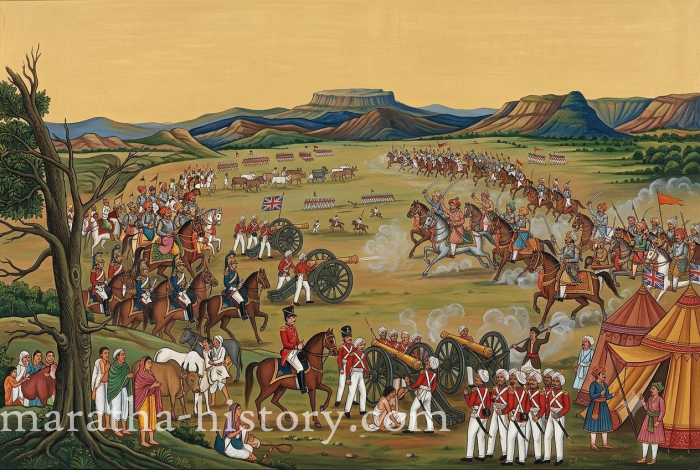
Early in the morning of 5th November 1817, Peshwa Bajirao II moved to Parvati, from where he could have a bird’s-eye view of the day's proceedings. Under Bapu Gokhale, the Marathas attacked and burnt the British Residency to the ground, as well as whatever remained of the old cantonment at Garpir. Elphinstone made his way along the river before crossing it via Holkar’s Bridge and retreating to the camp at Khadki.
१५ नोव्हेंबर १८१७ च्या पहाटे, पेशवे बाजीराव (दुसरे) पर्वतीवर गेले, जिथून त्यांना दिवसाच्या घडामोडींवर नजर ठेवता येणार होती. बापू गोखले यांच्या नेतृत्वाखाली मराठ्यांनी ब्रिटिश रेसिडेन्सीवर तसेच गारपीर येथील जुन्या छावणीच्या उरल्यासुरल्या भागावर हल्ला केला आणि त्या वास्तू जाळून खाक केल्या. एल्फिन्स्टन यांनी नदीकाठाने मार्गक्रमण केले आणि होळकर पुलावरून नदी ओलांडून खडकी येथील छावणीकडे माघार घेतली.
One of the contemporary accounts of the battle comes from James Grant Duff, who was at the time on Elphinstone’s staff in Pune. He later wrote a work on Maratha history while serving as the Resident of Satara. On 5th Nov 1817, he is believed to have been stationed somewhere near Bhamburda, possibly on the hills behind what is today, Fergusson College. Duff describes how the vast grain-covered plains below were slowly filling with Maratha armies and more troops were streaming towards the city from further south.
या लढाईचा एक समकालीन वृत्तांत जेम्स ग्रँट डफ यांच्याकडून मिळतो; ते त्यावेळी पुण्यात एल्फिन्स्टन यांच्या कर्मचाऱ्यांच्या पथकात कार्यरत होते. पुढे साताऱ्याचे 'रेसिडेंट' (ब्रिटिश प्रतिनिधी) म्हणून काम करत असताना त्यांनी मराठा इतिहासावर एक ग्रंथ लिहिला. ५ नोव्हेंबर १८१७ रोजी ते भामबुर्डाजवळ कुठेतरी, कदाचित आजच्या फर्ग्युसन कॉलेजच्या मागील टेकड्यांवर तैनात असावेत असे मानले जाते. डफ यांनी वर्णन केले आहे की, खालील विस्तीर्ण मैदानावर हळूहळू मराठा सैन्य जमा होत होते आणि दक्षिणेकडून आणखी सैन्य शहराच्या दिशेने येत होते.
Having burnt the Residency to the ground, thousands of Maratha troops poured out onto the plains and towards Khadki to destroy the British camps. The deployment of troops below is from sometime in the afternoon on 5th Nov.
रेसिडेन्सी पूर्णपणे जाळून टाकल्यानंतर, हजारो मराठा सैनिक मैदानावर आणि खडकीतील ब्रिटिश छावण्या नष्ट करण्यासाठी त्या दिशेने चालून आले. खालील सैन्याची मांडणी ५ नोव्हेंबरच्या दुपारच्या वेळेतील आहे.