Daulatabad Fort is an impressive monument, dominating the surrounding landscape when driving on the road from Aurangabad to Ellora. The small stream locally known as river Manpuri River drains the area, bounded on the north and east by the Balaghat range of Sahyadri Hills. The fort looks down the plains on the south and west.
Daulatabad was founded by the Yadavas of Deogiri (The Hill of Gods) in 11th century A.D. under king Bhillama V, who led victorious campaigns against the Hoysalas, Paramaras and Chalukyas of Kalyani. Subsequently Yadava rulers retained their capital at Deogiri until A.D. 1296 when Ala-ud-din Khilji defeated Ramachandradeva, son of Krishna and held sway over it by forcibly reducing Ramachandradeva as his vassal. Later, Malik Kafur led his armies in A.D. 1306-07 and 1312 against the recalcitrant Ramachandradeva and his son Shankardeva successively, subdued them and killed the latter. Malik Kafur placed Harpaladeva on the throne who later declared his independence. Qutb-ud-din Mubarak Shah Khilji made a successful campaign against Deogiri and annexed the same to the Delhi Sultanate. Muhammad-bin-Tughluq, who succeeded the Khiljis at Delhi renamed Deogiri as Daulatabad ("Abode of Wealth") and got the capital shifted from Delhi to Daulatabad in A.D. 1328. But for various reasons he re-transferred his capital back to Delhi.
दौलताबाद किल्ला हे एक अत्यंत भव्य स्मारक आहे; औरंगाबादहून वेरूळकडे जाणाऱ्या रस्त्यावरून प्रवास करताना, आजूबाजूच्या संपूर्ण परिसरावर या किल्ल्याचे वर्चस्व दिसून येते. 'मानपुरी' या स्थानिक नावाने ओळखला जाणारा एक छोटा ओढा या परिसरातून वाहतो; या परिसराच्या उत्तर आणि पूर्व दिशांना सह्याद्री पर्वतरांगेतील 'बालाघाट' रांग विस्तारलेली आहे. किल्ल्यावरून दक्षिणेकडील आणि पश्चिमेकडील मैदानी प्रदेशाचे विहंगम दृश्य दिसते।
दौलताबादची स्थापना इ.स. ११ व्या शतकात, देवगिरीच्या (अर्थात 'देवांचा डोंगर') यादवांनी केली होती. ही स्थापना राजा भिल्लम पाचवा याच्या कारकिर्दीत झाली; या राजाने होयसाळ, परमार आणि कल्याणीचे चालुक्य यांच्याविरुद्ध यशस्वी लष्करी मोहिमांचे नेतृत्व केले होते. त्यानंतरही यादवी शासकांनी इ.स. १२९६ पर्यंत देवगिरीलाच आपली राजधानी कायम राखली. याच वर्षी अल्लाउद्दीन खिलजीने कृष्णाचा पुत्र असलेल्या रामचंद्रदेवाचा पराभव केला आणि रामचंद्रदेवाचा दर्जा एका मांडलिक राजापर्यंत खाली आणून, या प्रदेशावर आपले वर्चस्व प्रस्थापित केले. पुढे इ.स. १३०६-०७ आणि १३१२ मध्ये मलिक काफूरने, बंडखोर रामचंद्रदेव आणि त्यानंतर त्याचा पुत्र शंकरदेव यांच्याविरुद्ध अनुक्रमे लष्करी मोहिमा आखल्या; उसने या दोघांनाही नमवले आणि शंकरदेवाचा वध केला. मलिक काफूरने हरपालदेवाला गादीवर बसवले, परंतु हरपालदेवाने पुढे जाऊन स्वतःचे स्वातंत्र्य घोषित केले. कुतुबुद्दीन मुबारक शाह खिलजीने देवगिरीवर यशस्वी लष्करी मोहीम राबवली आणि या प्रदेशचे दिल्ली सल्तनतीमध्ये विलीनीकरण केले. दिल्लीतील खिलजी सत्तेनंतर गादीवर आलेल्या मुहम्मद बिन तुघलकाने देवगिरीचे नाव बदलून 'दौलताबाद' (अर्थात 'संपत्तीचे आगार') असे ठेवले आणि इ.स. १३२८ मध्ये राजधानी दिल्लीहून दौलताबादला हलवली. मात्र, विविध कारणांमुळे उसने आपली राजधानी पुन्हा दिल्लीला हलवली।
Political Transitions & Structural Evolution
राजकीय घडामोडी आणि वास्तूंचा विकास
By quick succession of political events, the area was wrestled from the Imperial authority and the Bahmani rulers under Hasan Gangu extended his control over Daulatabad as well. By 1499 the Nizam Shahis of Ahmednagar not only captured but also made Daulatabad as their capital in A.D. 1607. The subsequent period witnessed a series of wars between the Deccan Sultans and the Mughals under Akbar and Shah Jahan. In 1633 A.D. Daulatabad was finally captured after a prolonged siege of four months. It was during this time Aurangzeb was placed as viceroy of Deccan who led his campaigns against Bijapur and Golconda from Daulatabad. For a short period Daulatabad was under the control of the Marathas before the Nizams of Hyderabad took control of it in 1724 A.D.
राजकीय घडामोडींच्या जलद चक्रामुळे, हा प्रदेश दिल्लीच्या केंद्रीय सत्तेच्या हातून निसटला आणि हसन गंगूच्या नेतृत्वाखालील बहमनी शासकांनी दौलताबादवरही आपले नियंत्रण प्रस्थापित केले. इ.स. १४९९ पर्यंत अहमदनगरच्या निजामशाहीने हा किल्ला केवळ जिंकूनच घेतला नाही, तर इ.स. १६०७ मध्ये दौलताबादला आपली राजधानीही बनवले. त्यानंतरच्या काळात दख्खनचे सुलतान आणि अकबर व शाहजहाँ यांच्या नेतृत्वाखालील मुघल यांच्यात युद्धांची एक मालिकाच पाहायला मिळाली. अखेरीस, इ.स. १६३३ मध्ये चार महिने चाललेल्या प्रदीर्घ वेढ्यानंतर दौलताबाद किल्ला मुघलांच्या ताब्यात आला. याच काळात औरंगजेबाची दख्खनचा सुभेदार म्हणून नेमणूक करण्यात आली होती; त्याने दौलताबाद येथून विजापूर आणि गोलकोंडा यांच्याविरुद्धच्या मोहिमांचे नेतृत्व केले. काही काळासाठी दौलताबाद मराठ्यांच्या अधिपत्याखाली होते; त्यानंतर इ.स. १७२४ मध्ये हैदराबादच्या निजामांनी या किल्ल्याचा ताबा घेतला।
Built on a 200 meter high conical hill, Daulatabad was one of the most powerful forts of the medieval Deccan. The defense system consists of two moats and three encircling fortification walls with lofty gates and bastions at regular intervals. The entire fort complex together with all the fortification walls consists of an area measuring approximately 94.83 hectares.
२०० मीटर उंच असलेल्या एका शंकूच्या आकाराच्या टेकडीवर वसलेला दौलताबाद हा मध्ययुगीन दख्खनमधील सर्वात अभेद्य किल्ल्यांपैकी एक होता. या किल्ल्याच्या संरक्षण व्यवस्थेमध्ये दोन खंदक आणि तीन तटबंदीच्या भिंतींचा समावेश आहे; या भिंतींवर ठराविक अंतरावर भव्य प्रवेशद्वारे आणि बुरुज उभारण्यात आले आहेत. संपूर्ण किल्ला परिसर आणि त्यातील सर्व तटबंदीच्या भिंती मिळून, हा भाग अंदाजे ९४.८३ हेक्टर क्षेत्रात विस्तारलेला आहे।
The fort was enlarged and structures were added subsequently as the fort passed on from one hand to the other and from one dynasty to another. Today the Daulatabad Fort, besides the moat and fortification wall consists of structures like stepped wells (baolis), kacheri (court) building, Bharat Mata Temple (temple dedicated to Mother India), Hathi (Elephant) tank, Chand Minar, Aam Khas building (Hall of Public Audience), Royal Hammam, Chini Mahal, Rang Mahal, Baradari on the hill top, water cisterns, rock cut structure and Andheri (the Dark Passage). The 10 unfinished rock cut caves formed to the south of Rangmahal belong to the Yadava period.
हा किल्ला एका शासकाकडून दुसऱ्याकडे आणि एका राजवंशाकडून दुसऱ्याकडे हस्तांतरित होत गेला, तसतसे या किल्ल्याचा विस्तार करण्यात आला आणि त्यात नवीन वास्तूंची भर घालण्यात आली. आज दौलताबाद किल्ल्यामध्ये खंदक आणि तटबंदीव्यतिरिक्त, पायऱ्यांच्या विहिरी (बावडी), कचेरी (न्यायालय) इमारत, भारत माता मंदिर (भारतांबिकेला समर्पित मंदिर), हत्ती हौद, चांद मिनार, आम खास इमारत (सार्वजनिक दरबाराचे दालन), शाही हमाम, चिनी महाल, रंग महाल, टेकडीच्या माथ्यावरील बारादरी, पाण्याच्या टाक्या, खडकात कोरलेल्या वास्तू आणि 'अंधेरी' (अंधारमय मार्ग) यांसारख्या वास्तूंचा समावेश आहे. रंग महालाच्या दक्षिणेस आढळणाऱ्या, खडकात कोरलेल्या १० अपूर्ण गुंफा यादवकालीन आहेत।
The vestiges unearthed from time to time in the fort complex revealed the existence of a multi-cultural religious activity at Daulatabad. These consist of various sculptures of gods and goddesses of Brahmanical pantheon, the Jaina tirthankaras, architectural members of secular and non-secular character, cannons, utensils of copper, etc. The excavations carried out within the fort complex between 2003 and 2007 have laid bare the lower city complex consisting of main lanes and by-lanes bordered by remnants of various structures of different dimensions.
किल्ला परिसरात वेळोवेळी उत्खननातून सापडलेल्या अवशेषांवरून दौलताबाद येथे बहुसांस्कृतिक आणि धार्मिक उपक्रम अस्तित्वात असल्याचे स्पष्ट होते. या अवशेषांमध्ये वैदिक (ब्राह्मणी) देवदेवतांच्या विविध मूर्ती, जैन तीर्थंकरांच्या मूर्ती, धार्मिक व निधर्मी स्वरूपाचे वास्तुशिल्पीय घटक, तोफा, तांब्याची भांडी इत्यादींचा समावेश आहे. २००३ ते २००७ या कालावधीत किल्ला परिसरात करण्यात आलेल्या उत्खननातून 'निचले शहर' (किल्ल्याच्या पायथ्याशी वसलेले शहर) उजेडात आले आहे; या शहरामध्ये मुख्य रस्ते आणि गल्ली-बोळ असून, त्यांच्या दुतर्फा विविध आकारांच्या इमारतींचे अवशेष दिसून येतात।
Cannons at Daulatabad Fort
दौलताबाद किल्ल्यावरील तोफा
A large number of cannons are found at Daulatabad Fort, some in their original places like bastions on fort walls and circular towers while others were collected from various locations and displayed in the courtyard near the entrance gate and near Aam Khas gate. These cannons range from large to heavy guns to medium howitzers and handguns. These cannons are made of either bronze or iron—both wrought and cast. The cannons displayed near the entrance gate of the fort, represent many varieties of guns.
दौलताबाद किल्ल्यावर मोठ्या संख्येने तोफा आढळतात. यातील काही तोफा बुरुजांवर आणि गोलाकार मनोऱ्यांवर अशा त्यांच्या मूळ जागीच आहेत; तर काही तोफा विविध ठिकाणांहून गोळा करून प्रवेशद्वाराजवळील प्रांगणात आणि 'आम खास' दरवाजाजवळ प्रदर्शनासाठी मांडण्यात आल्या आहेत. या तोफांमध्ये मोठ्या आणि अतिशय जड तोफांपासून ते मध्यम आकाराच्या 'हाऊविट्झर्स' (लघुतोफा) आणि हाताने वापरल्या जाणाऱ्या बंदुकांपर्यंत विविध प्रकारांचा समावेश आहे. या तोफा कांस्य (पितळ-कासे) किंवा लोखंडापासून बनवलेल्या आहेत—यात घडवून (wrought) आणि ओतून (cast) तयार केलेल्या अशा दोन्ही प्रकारच्या तोफांचा समावेश आहे. किल्ल्याच्या प्रवेशद्वाराजवळ प्रदर्शनासाठी ठेवलेल्या तोफा, बंदुकांचे अनेक विविध प्रकार दर्शवतात।
The iron cannon placed in a left side cell is 1.82 m long with bore of 7 cm diameter. A bronze cannon placed near the second entry gate is 3.15 m in length and has a 12 cm dia. bore. This is one of the most ornate cannons depicted with leaf design on its muzzle, a rope design covering the rings and cascabel portion portrays a tiger holding a hunted deer in its mouth. Besides bronze cannons, there are smaller guns and mortars made of iron with varying length from 90 cm to 2.90 m. Among the various dynasties ruling Daulatabad, Mughals and Marathas were leading in promoting artillery.
डाव्या बाजूच्या एका कप्प्यात ठेवलेली लोखंडी तोफ १.८२ मीटर लांब असून, तिच्या नळीचा (bore) व्यास ७ सेंटीमीटर आहे. दुसऱ्या प्रवेशद्वाराजवळ ठेवलेली एक कांस्य तोफ ३.१५ मीटर लांब असून, तिच्या नळीचा व्यास १२ सेंटीमीटर आहे. ही किल्ल्यावरील सर्वात सुशोभित तोफांपैकी एक आहे; तिच्या तोंडावर (muzzle) पानांची नक्षी कोरलेली आहे, तोफेच्या कड्यांवर दोरीसारखी नक्षी आहे आणि तोफेच्या मागील बाजूस (cascabel) एका वाघाचे शिल्प कोरलेले आहे, ज्याच्या तोंडात त्याने शिकार केलेले एक हरीण पकडलेले दिसते. कांस्य तोफांव्यतिरिक्त, येथे लोखंडापासून बनवलेल्या लहान बंदुका आणि 'मोर्टार्स' (उखळी तोफा) देखील आहेत, ज्यांची लांबी ९० सेंटीमीटर ते २.९० मीटर दरम्यान बदलते. दौलताबादवर राज्य केलेल्या विविध राजवंशांपैकी, मुघल आणि मराठे हे तोफखान्याला प्रोत्साहन देण्यात आणि त्याचा विकास करण्यात अग्रेसर होते।
The Mendha Tope (Ram Cannon)
मेंढा तोफ (Ram Cannon)
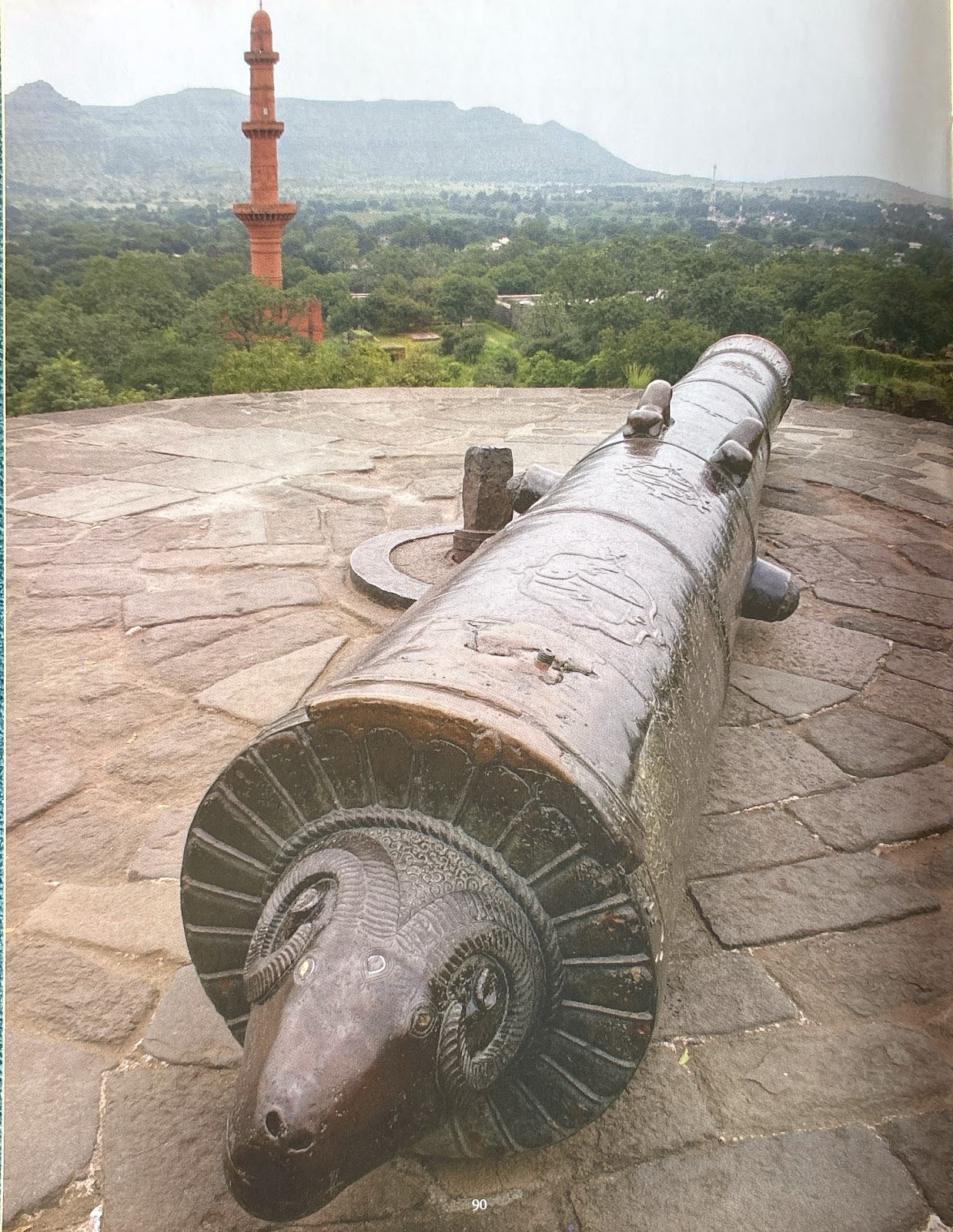
The Mendha tope (Ram Cannon) originally known as Qila Shikan (Breaker of Forts) is placed on an elevated circular platform (16.30 m in dia.) located between Chini Mahal and Rang Mahal. The cascabel is in the form of a ram, and hence the name "Mendha Tope" gained prominence. This cannon belongs to Mughal Emperor Aurangazeb (1658-1707 A.D.) as revealed by the inscription near the muzzle, which reads as Abul Zafar Muhiuddin Muhammad Aurangzeb Bahadur Alamgir Badshah Gazi.
'मेंढा तोफ' (Ram Cannon) ही मूळतः 'किला शिकन' (किल्ले भेदणारी/तोडणारी) या नावाने ओळखली जात असे. ही तोफ 'चिनी महाल' आणि 'रंग महाल' यांच्या दरम्यान असलेल्या एका उंच, गोलाकार चौथऱ्यावर (ज्याचा व्यास १६.३० मीटर आहे) ठेवलेली आहे. या तोफेचा मागील भाग (cascabel) एका मेंढ्याच्या आकाराचा आहे; म्हणूनच या तोफेला 'मेंढा तोफ' हे नाव मिळाले आणि तेच नाव पुढे अधिक प्रचलित झाले. तोफेच्या तोंडाजवळील (muzzle) एका शिलालेखावरून असे स्पष्ट होते की, ही तोफ मुघल सम्राट औरंगजेब (इ.स. १६५८-१७०७) यांच्या काळातील आहे. या शिलालेखावर 'अबुल जफर मुहिउद्दीन मुहम्मद औरंगजेब बहादूर आलमगीर बादशाह गाझी' असे नाव कोरलेले आहे।
Three other inscriptions are noticed on the cannon. The inscription on the muzzle states, "With God's help victory is near" and "all believers are in God's protection". The third inscription gives the name, "Tope Qila Shikan" (Breaker of Forts), while the fourth inscription informs that Muhammad Hussain Arab manufactured the cannon. Another inscription, partly covered with a plate, on the base provides information on the weight of the gunpowder and shot used for the cannon. Cast in bronze, the cannon measures 5.30 m in length. The calibre of the cannon is 20 cm, which can easily hurl a heavy shot. A pivot is provided at the centre of the platform, which once held the cannon to enable its rotation in any desired direction.
या तोफेवर आणखी तीन शिलालेख (कोरीव मजकूर) आढळून येतात. तोफेच्या तोंडाकडील भागावर असलेल्या शिलालेखात असे नमूद केले आहे की, "ईश्वराच्या मदतीने विजय समीप आहे" आणि "सर्व श्रद्धावान लोक ईश्वराच्या संरक्षणात आहेत". तिसऱ्या शिलालेखात या तोफेचे नाव "तोफ-ए-किला शिकन" (किल्ले भेदणारी तोफ) असे दिले आहे; तर चौथ्या शिलालेखात ही तोफ 'मुहम्मद हुसेन अरब' यांनी तयार केली असल्याची माहिती मिळते. तोफेच्या तळाशी असलेला, आणि अंशतः एका पत्र्याने झाकलेला, आणखी एक शिलालेख तोफेसाठी वापरल्या जाणाऱ्या दारूगोळ्याचे आणि गोळ्यांचे (shots) वजन किती होते, याविषयी माहिती देतो. काशापासून घडवलेल्या या तोफेची लांबी ५.३० मीटर आहे. या तोफेचा व्यास (calibre) २० सेंटीमीटर असून, ती सहजपणे एखादा जड गोळा दूरवर फेकू शकते. तोफेच्या चौथऱ्याच्या मध्यभागी एक 'धुरा' (pivot) बसवलेला आहे; या धुऱ्याला तोफ जोडलेली असे, ज्यामुळे ती कोणत्याही इच्छित दिशेने फिरवता येत असे।
Dara Shukoh's & Durga Cannon
दारा शुकोह आणि दुर्गा तोफ
Dara Shukoh's Cannon: Dara Shukoh's cannon is placed near Aam Khas and is typical of a composite cannon from the Mughal period. There are three inscriptions in Persian, bearing the title of Dara Shukoh, elder son of Shah Jahan and brother of Aurangzeb, the name of the manufacturer Muhammad Hussain, and hijari era 1038.
दारा शुकोहची तोफ: दारा शुकोहची तोफ 'आम खास'च्या (Aam Khas) जवळ ठेवलेली असून, ती मुघल काळातील एका वैशिष्ट्यपूर्ण 'मिश्रधातूच्या' (composite) तोफेचे उत्तम उदाहरण आहे. या तोफेवर पर्शियन भाषेत तीन शिलालेख कोरलेले आहेत; या शिलालेखांमध्ये शाहजहाँचा ज्येष्ठ पुत्र आणि औरंगजेबाचा भाऊ असलेल्या दारा शुकोहचा किताब (पदनाम), तोफ घडवणाऱ्या मुहम्मद हुसेनचे नाव आणि हिजरी सन १०३८ या वर्षाचा उल्लेख आढळतो।
Durga Tope: Durga tope (Durga cannon) is located at the highest point of the Daulatabad fort. The cannon is placed on a large platform to target the approaching enemy in open plains and also the surrounding mountain ranges. It is a 5.80 m long bronze cannon with varying thickness from 48 to 42 cm and 18 cm calibre. The name Durga is inscribed on the cannon in devanagari script.
दुर्गा तोफ: 'दुर्गा तोफ' दौलताबाद किल्ल्याच्या सर्वात उंच शिखरावर स्थित आहे. खुल्या मैदानातून चाल करून येणाऱ्या शत्रूला तसेच किल्ल्याभोवतीच्या पर्वतरांगांमध्ये लपलेल्या शत्रूला लक्ष्य करण्यासाठी, ही तोफ एका विशाल चौथऱ्यावर बसवण्यात आली आहे. ही ५.८० मीटर लांबीची काशाची तोफ असून, तिची जाडी ४८ ते ४२ सेंटीमीटर दरम्यान कमी-जास्त होत जाते; तसेच तिचा व्यास १८ सेंटीमीटर आहे. या तोफेवर 'दुर्गा' हे नाव देवनागरी लिपीत कोरलेले आहे।
Imported Artillery & Detachable Wrought Iron Systems
आयात केलेली सामग्री व फोर्ज-वेल्डेड लोह रचना
Daulatabad fort was never under any European power but a large quantity of artillery seems to have been purchased from the British, Dutch, and Portuguese. The cannon placed in front of Aam Khas Gate is an imported piece of artillery from the Netherlands. It was cast in bronze in 1642 A.D. as indicated by an inscription on the breech at Amsterdam. A flag hanging in a ring is shown here in relief bearing the typical mark of the Dutch United East India Company, Vereenigde Oostindische Compagnie (VOC).
दौलताबाद किल्ला कधीही कोणत्याही युरोपियन सत्तेच्या अधिपत्याखाली राहिला नाही; तरीही, या किल्ल्यासाठी ब्रिटिश, डच आणि पोर्तुगीज या सत्तांकडून मोठ्या प्रमाणात तोफखाना सामग्री खरेदी करण्यात आल्याचे दिसून येते. 'आम खास' प्रवेशद्वारासमोर ठेवलेली तोफ ही नेदरलँड्समधून आयात केलेली एक तोफ आहे. तोफेच्या मागील भागावर (breech) असलेल्या एका शिलालेखावरून असे समजते की, ही तोफ इ.स. १६४२ मध्ये ॲमस्टरडॅम येथे काशापासून घडवण्यात आली होती. या तोफेवर एका कडीमध्ये लटकणारा ध्वज उठावदार नक्षीकाम स्वरूपात दर्शवण्यात आला आहे; या ध्वजावर 'डच युनायटेड ईस्ट इंडिया कंपनी'चे (Vereenigde Oostindische Compagnie - VOC) वैशिष्ट्यपूर्ण बोधचिन्ह कोरलेले आहे।
Daulatabad Fort also played an important role in the religious history of medieval India. The Yadavas, Hindu rulers, patronized Jainism on a large scale. It is also important from a religious point of view that from here Sufism spread in the Deccan. It is here that the famous medieval saint Janardhana Swami—the Guru of saint Ekanath—attended Samadhi on the top of the hill.
मध्ययुगीन भारताच्या धार्मिक इतिहासामध्येही दौलताबाद किल्ल्याने एक महत्त्वाची भूमिका बजावली आहे. हिंदू राज्यकर्ते असलेल्या यादव राजांनी जैन धर्माला मोठ्या प्रमाणावर राजाश्रय दिला होता. धार्मिक दृष्टिकोनातून आणखी एक महत्त्वाची बाब म्हणजे, याच ठिकाणावरून 'सूफी संप्रदायाचा' (Sufism) प्रसार दख्खन प्रदेशात झाला. येथेच संत एकनाथांचे गुरू, प्रसिद्ध मध्ययुगीन संत जनार्दन स्वामी यांनी टेकडीच्या माथ्यावर समाधी घेतली होती।
A wrought iron cannon found near Nagar Talav is one of the largest forge-welded guns in the Daulatabad assemblage. It seems that the gunpowder chamber of the cannon was fabricated separately and then it was attached to the main chase portions along with two reinforcements containing the bore. This is a classic example of a detachable gunpowder chamber type of gun.
नगर तलावाजवळ सापडलेली एक घडवलेल्या लोखंडाची तोफ ही दौलताबाद येथील तोफांच्या संग्रहातील सर्वात मोठ्या फोर्ज-वेल्डेड तोफांपैकी एक आहे. असे दिसते की, तोफेची दारूगोळ्याची खोली स्वतंत्रपणे तयार करण्यात आली होती आणि नंतर ती बोअर असलेल्या दोन मजबुतीकरणांसह मुख्य चेसच्या भागांना जोडण्यात आली. हे वेगळे करता येण्याजोग्या दारूगोळ्याच्या खोलीच्या प्रकारच्या तोफेचे एक उत्कृष्ट उदाहरण आहे।
The chase along with the first and second reinforcements was manufactured with 61 pre-fabricated iron rings hooped and forge-welded over as many as 40 longitudinally placed iron staves. These staves are flared out from the mouth/muzzle of the cannon. These portions of the gun form a parallel cylinder measuring 0.56 m dia. and 0.35 m bore on both ends. The breech vent portion is fabricated with 18 iron rings forged together.
चेस, पहिल्या आणि दुसऱ्या मजबुतीकरणासह, ४० पर्यंत लांब ठेवलेल्या लोखंडी दांड्यांवर ६१ पूर्वनिर्मित लोखंडी कड्या बसवून आणि फोर्ज-वेल्ड करून तयार करण्यात आले होते. या दांड्या तोफेच्या तोंडाकडील/तोंडाकडील भागापासून बाहेरच्या बाजूला पसरलेल्या आहेत. तोफेचे हे भाग मिळून ०.५६ मीटर व्यास आणि दोन्ही टोकांना ०.३५ मीटर बोअर असलेला एक समांतर दंडगोल तयार करतात. ब्रीच व्हेंटचा भाग १८ लोखंडी कड्यांना एकत्र घडवून तयार केला जातो।