King Tulajaji II of Thanjavur Maratha dynasty had no issue to succeed him. He proposed to take an adoption of an eligible boy from his agnatic line and his choice fell on Serfoji. Serfoji was the son of Shahaji an agnate whose family was in the protection and patronage of Tulaja II and his father Pratap Singh. Serfoji was born on 24th September 1777. He was adopted on 22-1-1787 by Tulaja II. Serfoji II became the Rajah of Thanjavur on 30th June 1798.
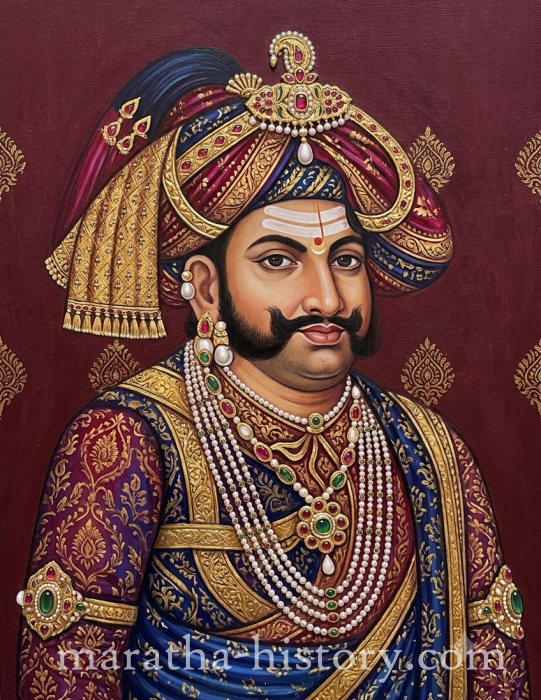
तंजावरच्या मराठा राजवंशाचे राजे तुळजाजी दुसरे यांना आपला वारस म्हणून गादीवर बसवण्यासाठी स्वतःचे असे कोणतेही अपत्य नव्हते। त्यांनी आपल्याच कुळातील (सगोत्र) एका योग्य मुलाला दत्तक घेण्याचा प्रस्ताव मांडला आणि त्यांची निवड सरफोजी यांच्यावर झाली। सरफोजी हे शहाजी यांचे पुत्र होते; शहाजी हे तुळजाजी दुसरे आणि त्यांचे वडील प्रतापसिंह यांच्या आश्रयाखाली व संरक्षणाखाली असलेल्या एका सगोत्र शाखेतील व्यक्ती होते। सरफोजी यांचा जन्म २४ सप्टेंबर १७७७ रोजी झाला। २२ जानेवारी १७८७ रोजी तुळजाजी दुसरे यांनी त्यांना दत्तक घेतले। ३० जून १७९८ रोजी सरफोजी दुसरे हे तंजावरचे राजे बनले।
The Cultural & Scientific Legacy
सांस्कृतिक आणि वैज्ञानिक सुवर्णकाळ
The most famous and lasting rule was that of King Serfoji II who ascended the throne in 1798 A.D. By that time the British had veritably taken control of most of southern India. The revenue and judicial systems in Thanjavur were already taken over by the East India Company, leaving Serfoji a mere titular head. Tulaja II adopted little Serfoji born in the royal Bhosle family with all the relevant legal procedures before his death. Rev Christian Fredrich Schwartz, a Dutch missionary was appointed as the teacher and guide. Serfoji was trained and tutored in St. George school Madras under the direct supervision of Rev Schwartz and in course of time became a scholar.
राजा सरफोजी दुसरे यांचे राज्य सर्वात प्रसिद्ध आणि चिरस्थायी ठरले; ते इ.स. १७९८ मध्ये गादीवर आरूढ झाले। तोपर्यंत ब्रिटिशांनी दक्षिण भारताच्या बहुतांश भागावर प्रत्यक्ष ताबा मिळवला होता। तंजावरमधील महसूल आणि न्यायव्यवस्था यांवर 'ईस्ट INDIA कंपनी'ने आधीच नियंत्रण मिळवले होते, ज्यामुळे सरफोजी हे केवळ नाममात्र प्रमुख उरले होते। तुळजाजी दुसरे यांनी आपल्या मृत्यूपूर्वी, राजघराण्यातील (भोसले कुळातील) लहानग्या सरफोजी यांना सर्व कायदेशीर सोपस्कार पूर्ण करून दत्तक घेतले होते। डच धर्मप्रचारक रेव्हरंड ख्रिश्चन फ्रेडरिक श्वार्ट्झ यांची सरफोजी यांचे शिक्षक आणि मार्गदर्शक म्हणून नियुक्ती करण्यात आली। रेव्हरंड श्वार्ट्झ यांच्या थेट देखरेखीखाली मद्रास येथील 'सेंट जॉर्ज स्कूल'मध्ये सरफोजी यांचे शिक्षण व प्रशिक्षण झाले आणि कालांतराने ते एक प्रकांड पंडित बनले।
Serfoji devoted his life to the pursuit of culture and once again Thanjavur became renowned as a center for learning. His Saraswati Mahal Library was endowed with manuscripts, printed books collected from all over the world. This library boasts of treatises on Vedanta grammar, music, training of elephants and horses etc. His scientific bent of mind is demonstrated by his collection of various instruments like the air pump, electric machine, an ivory human skeleton etc. Apart from his avid collection of books and manuscripts Serfoji was more than a bibliophile. He established the Dhanvantari Mahal where physicians of allopathy, ayurveda, unani and siddha researched their systems of medicine. He had important herbs studied and catalogued in the form of exquisite hand paintings.
सरफोजी यांनी आपले संपूर्ण आयुष्य ज्ञानोпасनेसाठी आणि संस्कृती संवर्धनासाठी समर्पित केले; परिणामी, तंजावरला पुन्हा एकदा 'विद्याकेंद्र' म्हणून जगभर कीर्ती प्राप्त झाली। त्यांच्या 'सरस्वती महाल ग्रंथालया'मध्ये जगभरातून संकलित केलेली हस्तलिखिते आणि मुद्रित पुस्तकांचा प्रचंड संग्रह जमा करण्यात आला होता। या ग्रंथालयात वेदांत, व्याकरण, संगीत, हत्ती व घोड्यांचे प्रशिक्षण इत्यादी विषयांवरील ग्रंथांचा समृद्ध साठा आजही अभिमानाने जतन केला गेला आहे। त्यांची वैज्ञानिक दृष्टी आणि कुतूहल हे त्यांनी जमवलेल्या विविध उपकरणांच्या संग्रहावरून स्पष्ट होते; या संग्रहात 'एअर पंप' (हवा उपसण्याचे यंत्र), विद्युत यंत्र, हस्तिदंतापासून बनवलेला मानवी सांगाडा इत्यादींचा समावेश आहे। पुस्तके आणि हस्तलिखितांचा प्रचंड संग्रह करण्यापलीकडे जाऊन, सरफोजी हे केवळ एक 'ग्रंथप्रेमी' (Bibliophile) नव्हते, तर त्याहूनही अधिक काहीतरी होते। त्यांनी 'धन्वंतरी महाल'ची स्थापना केली; या ठिकाणी ॲलोपथी, आयुर्वेद, युनानी आणि सिद्ध या विविध वैद्यकीय प्रणालींमधील तज्ज्ञ वैद्य आपापल्या उपचारपद्धतींवर संशोधन करत असत। त्यांनी विविध महत्त्वाच्या औषधी वनस्पतींचा सखोल अभ्यास करवून घेतला आणि त्या वनस्पतींची अत्यंत सुबक व कलात्मक अशी हाताने काढलेली चित्रे (हस्तचित्रे) तयार करून त्यांचा एक सूचीबद्ध संग्रह सिद्ध केला।
Serfoji patronized music, dance and the fine arts. All in all, the Maratha rule in Thanjavur encouraged a golden period before its eventual culmination at the hands of the British. The two hundred years of Maratha rule left behind a rich legacy of art, music and architecture whose aroma still lingers within the city structure.
सरफोजी यांनी संगीत, नृत्य आणि ललित कलांना उदार आश्रय दिला। एकंदरीत पाहता, थंजावरमधील मराठा राजवटीने—ब्रिटिशांच्या हाती तिचा अंत होण्यापूर्वी—एका सुवर्णकाळाला प्रोत्साहन दिले। मराठा राजवटीच्या या दोनशे वर्षांनी कला, संगीत आणि वास्तुकलेचा एक समृद्ध वारसा मागे ठेवला आहे, ज्याचा सुगंध आजही शहराच्या रचनेत दरवळत आहे।
Rajah Serfoji’s reign witnessed revival on literature, education, music, dance, medicine, and in fact his period was the golden era in the history of Thanjavur. He loved foreign languages. At the same time, he did not neglect his native languages and received the best Hindu education under eminent Pandits of the orthodox Hindu school. This kind of education made him strive for the harmonious blending of both eastern and western cultures and this effort of his manifested in his various activities in the field of music, medicines etc. He was a scholar of English, French, German, Sanskrit, Tamil, and Marathi. His many works in Indian languages reveal that he was a great scholar. He wrote hundreds of songs in Sanskrit and all are set to music and dance and recitals.
राजा सरफोजी यांच्या राजवटीत साहित्य, शिक्षण, संगीत, नृत्य आणि वैद्यकीय क्षेत्रांचे पुनरुज्जीवन झाले; किंबहुना, त्यांचा काळ हा थंजावरच्या इतिहासातील सुवर्णयुगच ठरला। त्यांना परदेशी भाषांची विशेष आवड होती। त्याच वेळी, त्यांनी आपल्या मातृभाषांकडेही दुर्लक्ष केले नाही; उलट, सनातनी हिंदू परंपरेतील नामवंत पंडितांच्या मार्गदर्शनाखाली त्यांनी उत्कृष्ट हिंदू शिक्षण संपादन केले। या प्रकारच्या शिक्षणामुळेच त्यांनी पौर्वात्य आणि पाश्चात्य संस्कृतींचा सुसंवादी संगम घडवून आणण्याचा प्रयत्न केला; आणि त्यांचा हा प्रयत्न संगीत, वैद्यकशास्त्र इत्यादी क्षेत्रांतील त्यांच्या विविध उपक्रमांतून स्पष्टपणे दिसून येतो। ते इंग्रजी, फ्रेंच, जर्मन, संस्कृत, तमिळ आणि मराठी या भाषांचे गाढे अभ्यासक होते। संस्कृत, तमिळ आणि मराठी यांसारख्या भारतीय भाषांमधील त्यांची अनेक ग्रंथनिर्मिती त्यांची विद्वत्ता सिद्ध करते। त्यांनी संस्कृतमध्ये शेकडो गीते रचली असून, त्या सर्वांची रचना संगीत, नृत्य आणि गायन-वाचनास अनुरूप अशी करण्यात आली आहे।
He is the author of several dance pieces of Alarippu, Jatiswara, Sabdam and Padam. He has composed countless Kavuthuvam, Slokavarnam and Prabhandas all adopted to Bharatanatyam. Soollukattu Swaras Jathis and Sahityas with their respective notations in Indian swaras are given for each item with meticulous care. Perhaps his collections on Bharatanatyam dances are the largest in the whole of India. Nowhere in India can be seen such huge collections of Sampradya Natyam in one single place. Such rare types of dances like Jakkini, Perani, Dhraupad desi navadadam and Kuravai were in vogue and we have evidence of it being practised at his court. These types of dances have now become obsolete.
'अलारिप्पू', 'जतिस्वर', 'शब्दम्' आणि 'पदम्' यांसारख्या अनेक नृत्यप्रकारच्या रचनांचे ते निर्माते आहेत। त्यांनी असंख्य 'कौतुवम्', 'श्लोकवर्णम्' आणि 'प्रबंध' यांची रचना केली असून, त्या सर्वांचा समावेश 'भरतनाट्यम्' या नृत्यशैलीत करण्यात आला आहे। प्रत्येक नृत्यप्रकारासाठी 'सुलुकट्टू', 'स्वर', 'जती' आणि 'साहित्य' (गीत) यांची रचना अत्यंत बारकाईने करण्यात आली असून, त्यासोबतच भारतीय स्वरपद्धतीनुसार त्यांची स्वरलिपीही (नॉटेशन्स) देण्यात आली आहे। कदाचित, भरतनाट्यम् नृत्याशी संबंधित त्यांचा हा संग्रह संपूर्ण भारतातच सर्वात मोठा असावा। 'सांप्रदाय नृत्या'चा (पारंपारिक नृत्यांचा) इतका प्रचंड संग्रह एकाच ठिकाणी, संपूर्ण भारतात अन्यत्र कोठेही पाहायला मिळत नाही। 'जक्किनी', 'पेराणी', 'ध्रुपद', 'देशी', 'नवताडम्' आणि 'कुरवई' यांसारखे दुर्मिळ नृत्यप्रकार त्या काळी प्रचलित होते; आणि त्यांच्या दरबारात या नृत्यांचा सराव केला जात असल्याचे पुरावेही उपलब्ध आहेत। हे नृत्यप्रकार आता काळाच्या ओघात लुप्त झाले आहेत।
He was also praised by Lord Valentia, who visited him in the year 1804 as capable of composing tunes in English. His orchestra comprised of several native and English instruments richly ornamented with diamonds and pearls. His band consists of both European and Indian musical instruments called ‘Tanjore band.’ He composed songs on several Indian languages capable of orchestration on western musical instruments. Indian tunes and ragas were set to European staff notation fit to be used on his orchestra. They are recorded in several of his music books.
इ.स. १८०४ मध्ये सरफोजींच्या दरबाराला भेट दिलेल्या 'लॉर्ड व्हॅलेन्शिया' यांनीही त्यांची प्रशंसा केली होती; त्यांनी सरफोजींना इंग्रजी चालींवर (सुरावटींवर) संगीत रचना करण्यास समर्थ असल्याचे गौरवले होते। त्यांच्या वाद्यवृंदात (ऑर्केस्ट्रात) अनेक भारतीय आणि इंग्रजी वाद्यांचा समावेश होता; आणि या वाद्यांना हिरे व मोत्यांनी अत्यंत समृद्धपणे अलंकृत करण्यात आले होते। त्याच्या वाद्यवृंदात युरोपीय आणि भारतीय दोन्ही प्रकारची वाद्ये होती, ज्याला ‘तंजावर बँड’ म्हटले जात असे। त्याने अनेक भारतीय भाषांमध्ये अशी गाणी रचली, जी पाश्चात्य वाद्यांवर वाजवता याण्याजोगी होती। भारतीय चाली आणि रागांना युरोपीय स्वरलिपीत बसवले गेले, जेणेकरून ते त्याच्या वाद्यवृंदात वापरता येतील। त्यांची नोंद त्याच्या अनेक संगीत पुस्तकांमध्ये आहे।
Bharatanatya was then at its peak and several prodigies whose compositions are now considered the best that south India has ever produced flourished at his court. Tamil Nadu is the cradle of Bharatanatyam, the traditional Bhagavatamel-the oldest type of the drama of the south received support at his hand. To the artists of Bhagavatha mela of the villages of Salliamangalam, Thepperumanallur, Needamangalam Serfoji Rajah gave gifts of land and cash. To many of his Chatram Bhagavata melas were attached and provisions were made for them in the Chatram.
भरतनाट्यम तेव्हा आपल्या परमोच्च शिखरावर होते आणि त्याच्या दरबारात अनेक प्रतिभावान कलाकार घडले, ज्यांच्या रचना आतापर्यंतच्या दक्षिण भारतातील सर्वोत्कृष्ट मानल्या जातात। तमिळनाडू हे भरतनाट्यमचे उगमस्थान आहे, दक्षिणेकडील नाटकाचा सर्वात जुना प्रकार असलेल्या पारंपरिक भागवतमेळ्याला त्याच्याकडून पाठिंबा मिळाला। सल्लियमंगलम, थेप्पेरुमनल्लूर, Needamangalam या गावांतील भागवतमेळ्याच्या कलाकारांना सर्फोजी राजाने जमीन आणि रोख रक्कम भेट दिली। त्याच्या अनेक चत्रमांना भागवतमेळे जोडलेली होती आणि चत्रमात त्यांच्यासाठी तरतूद केली जात असे।
He patronised poets and scholars. At regular intervals he used to call for Vidwat sabhas and delighted in hearing extensive poetry, panegyric and discussions on Tharka Sastra and subjects on music and dance. Swati Thirunal Maharajah of Travancore kept contact with Serfoji even before he came to the throne and both exchanged scholars, musicians and even their personal compositions. Saint Thyagaraja Swamigal, Syama Sastrigal, Muthu Swami Dikshitar, of the musical trinity were the contemporaries of Rajah Serfoji II.
त्यांनी कवी आणि विद्वानांना आश्रय दिला। ते नियमित अंतराने 'विद्वत् सभा' (विद्वानांच्या सभा) आयोजित करत असत आणि त्यामध्ये सविस्तर काव्यवाचन, स्तुतिपर रचना, तसेच तर्कशास्त्र व संगीत-नृत्य याविषयांवरील चर्चा ऐकण्यात त्यांना विशेष आनंद मिळत असे। त्रावणकोरचे महाराज स्वाती तिरुनल यांनी गादीवर येणार्यापूर्वीपासूनच सर्फोजी यांच्याशी संपर्क कायम ठेवला होता; या दोन्ही राजांनी एकमेकांकडे विद्वान, संगीतकार यांची देवाणघेवाण केली, इतकेच नव्हे तर त्यांनी आपापल्या स्वतःच्या रचनांचीही एकमेकांशी आदानप्रदान केले। 'संगीत त्रयी' म्हणून ओळखले जाणारे संत त्यागराज स्वामीगल, श्यामा शास्त्रीगल आणि मुथुस्वामी दीक्षितार हे राजे सर्फोजी (दुसरे) यांचे समकालीन होते।
Rajah Serfoji therefore devoted his life interest and wealth for the cultural uplift in spheres of literature, medicine, music, dance, drama and other fine arts which paved the way for an upheaval in art, literary and cultural fields.
त्यामुळेच, राजे सर्फोजी यांनी आपले संपूर्ण आयुष्य, आपली आवड आणि आपली संपत्ती ही साहित्य, वैद्यकशास्त्र, संगीत, नृत्य, नाट्य आणि इतर ललित कलांच्या क्षेत्रांतील सांस्कृतिक उत्थानासाठी समर्पित केली; ज्यामुळे कला, साहित्य आणि संस्कृती या क्षेत्रांमध्ये एका मोठ्या क्रांतीचा (उठावाचा) मार्ग प्रशस्त झाला।