
The Maharashtra government acquired the sword of Raghoji-I Bhonsle, of the royal house of the Bhonsles of Nagpur and the military general who led the expansion of the Marathas in eastern India in the mid-18th century. This acquisition was made at an auction held by Sotheby’s London in April 2025, at a value of 47.15 lakh INR. This is the first time the state government has purchased a historical antiquity in an international auction.
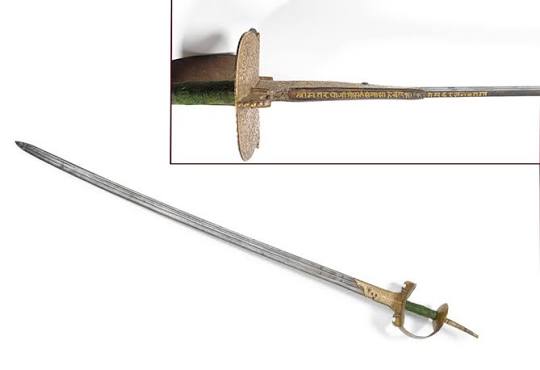
महाराष्ट्र सरकारने नागपूरच्या भोसले राजघराण्यातील राघोजी-१ भोसले यांची तलवार हस्तगत केली आहे. राघोजी-१ हे एक लष्करी सेनापती होते ज्यांनी १८ व्या शतकाच्या मध्यावर पूर्व भारतात मराठा सत्तेचा विस्तार करण्यात महत्त्वाची भूमिका बजावली होती. ही तलवार एप्रिल २०२५ मध्ये लंडन येथील 'सॉथबीज' (Sotheby’s) द्वारे आयोजित लिलावात ४७.१५ लाख रुपये किमतीला खरेदी करण्यात आली. एखाद्या आंतरराष्ट्रीय लिलावातून ऐतिहासिक वस्तू खरेदी करण्याची राज्य सरकारची ही पहिलीच वेळ आहे.
Exhibition and Public Display
प्रदर्शन आणि सार्वजनिक दर्शन
The sword made its public debut at the P L Deshpande Maharashtra Kala Academy (Ravindra Natya Mandir) in Prabhadevi, Mumbai, as part of the “Sena Saheb Subha Parakram Darshan” exhibition. The weapon is scheduled to travel across various districts in Maharashtra. The royal family descendants have requested that its permanent home be the Central Museum (Ajab Bangla) in Nagpur, where other artifacts from the Nagpur Maratha era are housed.
मुंबईतील प्रभादेवी येथील 'पु. ल. देशपांडे महाराष्ट्र कला अकादमी' (रवींद्र नाट्य मंदिर) येथे आयोजित "सेनासाहेब सुभा पराक्रम दर्शन" या प्रदर्शनाद्वारे ही तलवार पहिल्यांदाच जनतेसमोर मांडण्यात आली. ही तलवार महाराष्ट्रातील विविध जिल्ह्यांमध्ये नेली जाणार आहे. नागपूर-मराठा काळातील इतर ऐतिहासिक वस्तू जिथे जतन केल्या आहेत, त्या नागपूर येथील 'मध्यवर्ती संग्रहालयात' (अजब बंगला) या तलवारीचे कायमस्वरूपी जतन करावे, अशी विनंती या राजघराण्याच्या वंशजांनी केली आहे.
Characteristics of the 'Firangi' Sword
'फिरंगी' तलवारीची वैशिष्ट्ये
The sword is a classic "firangi" style weapon. This term historically denotes an Indian sword that incorporates a high-quality imported European blade paired with a traditional Indian hilt. Unlike the vast majority of medieval Indian weapons, which were anonymous and plain, this sword is exceptionally rare because it explicitly names its royal owner right on the metalwork. This precise identification makes it a priceless cultural treasure of the Maratha Empire's military legacy.
ही तलवार 'फिरंगी' शैलीतील एक उत्कृष्ट शस्त्र आहे. ऐतिहासिकदृष्ट्या, 'फिरंगी' ही संज्ञा अशा भारतीय तलवारीसाठी वापरली जाते, जिच्यात उच्च दर्जाचे आयात केलेले युरोपियन पाते आणि पारंपरिक भारतीय मूठ यांचा संगम साधलेला असतो. मध्ययुगीन काळातील बहुतांश भारतीय शस्त्रे ही सामान्यतः साधी आणि कोणाचेही विशिष्ट नाव नसलेली असत; मात्र, ही तलवार अत्यंत दुर्मिळ आहे कारण तिच्या धातूच्या भागावरच ती ज्या राजघराण्यातील व्यक्तीच्या मालकीची होती, त्यांचे नाव स्पष्टपणे कोरलेले आहे. या अचूक ओळखामुळेच, मराठा साम्राज्याच्या लष्करी वारशातील हा एक अमूल्य सांस्कृतिक ठेवा ठरला आहे.
The Inscription and Its Interpretation
कोरीवकाम आणि त्याचा अर्थ
A close examination of the sword reveals an inscription in gold inlay reading: ‘Shrimant-Raghoji-Bhosale-Sena-Sahab-Subha-Firang-Makar-Janab-Ganga.’ While the meaning of the inscription up to the word ‘Firang’ had been interpreted by many, the subsequent words and their significance remained unexplained. Opinions varied; some read it as ‘Janak,’ while others believed it to be ‘Janab.’ However, Pruthviraj concluded through his study that the word is indeed ‘Janab.’
या तलवारीवर बारकाईने बघितले असता ‘श्रीमंत-रघोजी-भोसले-सेना-साहब-सू(सु)भा-फिरंग-मकर-जा(नब)-(गं)गा,’ असे सोन्याच्या पाण्याने कोरलेले आहे. यातील फिरंग शब्दापर्यंत अनेकांनी अर्थ लावले होते. पण यापुढील शब्द व त्याच्या अर्थाची अद्याप उकल झालेली नव्हती. काहींच्या म्हणण्यानुसार, तिथे जनक लिहिले आहे, तर काहींना ते जनब आहे, असे वाटत आहे. पण माझ्या अध्ययनानुसार तो शब्द ब असल्याचे पृथ्वीराजाने सांगितले.
‘Makar’ refers to a crocodile. Here, the sword is compared to a crocodile's tail—a rare form of imagery. A crocodile’s tail provides the power to swim against the river's current, making it a symbol of strength. The Persian word ‘Janab’ signifies ‘tail.’ Since the *Makar* (crocodile) is the *Vahana* (mount) of the river Ganga, the poetic implication is likely that this *Firang* sword resembles the tail of the *Makar* found in the Ganga.
मगरीला मकर म्हटले जाते. यात तलवारीची तुलना मगरीच्या शेपटीशी केली आहे, जे दुर्मिळ आहे. मगरीची शेपटी ही नदीच्या वाहत्या प्रवाहाविरुद्ध, तिला पोहण्यास बळ देते म्हणजे शेपटी ही बळाचे प्रतीक आहे. यातील ‘जनब’ या फारसी शब्दाचा अर्थ शेपटी असा होतो. ही शेपटी कोणाची तर मकराची आणि मकर हे गंगेचे वाहन आहे. त्यामुळे गंगेतील मकराच्या शेपटीसारखी ही फिरंग आहे, असा याचा काव्यात्मक अर्थ असावा.
Historical Significance of 'Ganga'
'गंगा' शब्दाचे ऐतिहासिक महत्त्व
The word ‘Ganga’ on the sword holds great significance. The Marathas invaded Bengal between 1741 and 1742, marking the first time the Ganga River came under their control. Pruthviraj Dhawad concluded that this sword was likely crafted and inscribed with this poetic message following that event.
या तलवारीवरील गंगा या शब्दाला खूप महत्त्व आहे. १७४१-४२ च्या दरम्यान मराठ्यांनी बंगालवर स्वारी केली. त्यावेळी एक प्रकारे प्रथमच गंगा नदी त्यांच्या हाती आली होती. त्यानंतर ही तलवार बनून त्यावर सदर काव्यात्मक संदेश लिहिला गेला असावा, असे मत अभ्यासाअंती पृथ्वीराज धवड याने नोंदविले.